
resources
Transforming Higher Education: The Rise of Smart Campus Solutions
14 Apr 2026

Higher education, a cornerstone of societal advancement, is currently undergoing a profound transformation, with university campuses progressively embracing intelligent solutions. One might liken this evolution to upgrading from a rudimentary flip phone to a sophisticated smartphone—where functionality and user experience are fundamentally enhanced. Universities are increasingly leveraging advanced technologies to streamline operations for both students and staff, fostering improved learning environments, optimized campus management, and heightened safety protocols. Ultimately, the objective is to cultivate a more interconnected and efficient collegiate experience for everyone involved.
Key Takeaways
- Smart campus solutions harness technology to significantly enhance the student and faculty experience, thereby making daily campus life more connected and efficient.
- Artificial Intelligence (AI) plays a pivotal role in smart campuses, contributing to a wide spectrum of areas, from bolstering student success and delivering personalized advising to ensuring smoother campus operations.
- Furthermore, these technological upgrades can substantially improve campus sustainability by intelligently managing energy consumption and optimizing resource allocation—a dual benefit that conserves both financial resources and the environment.
- Student services are receiving a considerable boost through AI chatbots, which offer immediate assistance, and personalized academic support, guaranteeing that students receive the guidance they require precisely when it's needed.
- While the adoption of smart campus solutions presents numerous advantages, institutions must carefully consider the associated costs, navigate technical complexities, and ensure widespread stakeholder engagement to achieve successful implementation.
The Evolving Landscape of Higher Education
Digital Transformation in Academia
Higher education finds itself in the midst of a significant paradigm shift. For many years, universities have been steadily incorporating digital tools, but the current pace of change is truly revolutionary. We're witnessing an increasing prevalence of remote learning modalities, which, in turn, necessitates that campuses become more adept at managing resources and integrating sophisticated technology. Moreover, with heightened competition and a growing demand for higher education, universities are compelled to innovate. This entails reimagining pedagogical approaches, adopting advanced technological solutions, and refining processes to better serve both students and educators. Indeed, it's all about making the entire academic journey smoother and more impactful for everyone.
The impetus for digital transformation extends beyond merely keeping pace; it's fundamentally about cultivating a more responsive and profoundly effective learning environment. Institutions of higher learning are actively seeking to establish robust digital foundations, often driven by comprehensive data analytics. This necessitates collaborative efforts across various departments to identify and implement solutions tailored to their specific requirements, ranging from the establishment of cutting-edge smart laboratories to the development of centralized digital systems for information management.
Meeting the Demands of Digital Natives
Today's student population has grown up immersed in technology. They naturally expect seamless and intuitive interactions, whether they're enrolling in courses or accessing critical information. A prompt and efficient experience is, for them, a given. This represents a significant departure from traditional expectations, and universities must unequivocally adapt. Simply maintaining a basic website is no longer sufficient; students demand a cohesive, connected experience that spans their entire campus life. Interestingly, many students already regularly utilize AI tools, yet they often perceive a disconnect, feeling that their educational institutions aren't fully capitalizing on these transformative possibilities. This discernible gap underscores the need for universities to move beyond mere technological adoption and, instead, integrate these innovations in ways that genuinely empower and assist students.
The Imperative for Innovation
Universities simply cannot afford to remain stagnant. The world is evolving at an unprecedented rate, and with it, the needs of students and society at large are constantly shifting. This reality mandates that institutions foster an environment receptive to novel ideas and progressive methodologies. Innovation, far from being a mere buzzword, is an absolute prerequisite for sustained relevance and growth. It compels us to explore how technology can profoundly enhance teaching, learning, and campus life. Crucially, it also means embracing new approaches, even if they initially appear unconventional. This relentless drive for innovation is precisely what will enable higher education to maintain its vital role and fulfill its purpose in the decades to come. The substantial investment in new technologies is a clear indicator of a major leap forward amidst rapid technological advancements.
The pressure to innovate emanates from all directions: students anticipate more sophisticated experiences, the job market demands an ever-evolving skill set, and the very nature of knowledge itself is continuously expanding. Universities that proactively embrace change will undoubtedly be the ones that flourish.
Foundations of Smart Campus Solutions
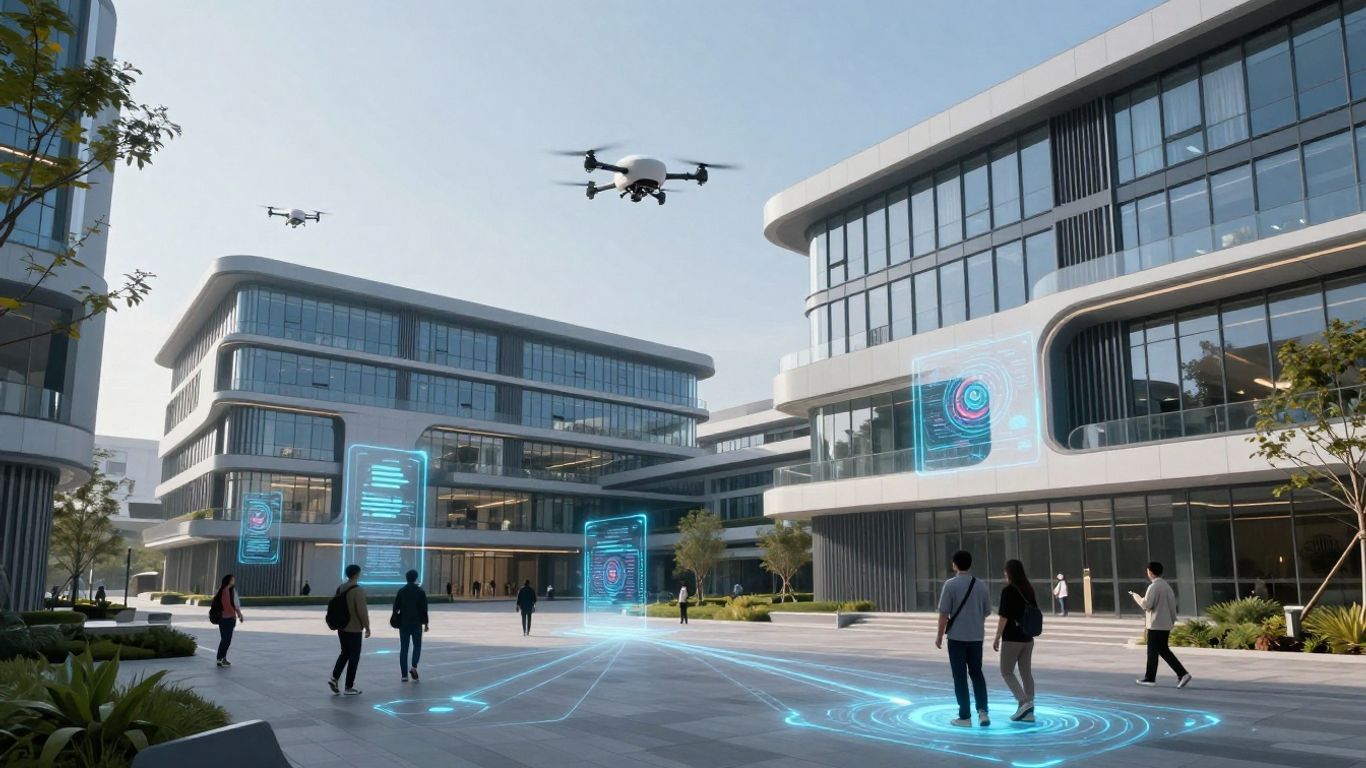
Propelling a university into the future involves far more than simply introducing a few computers. It's about meticulously constructing a cohesive, connected environment where technology works harmoniously to elevate the experience for every individual on campus. Consider it the creation of a dynamic, responsive ecosystem that intuitively adapts to the diverse needs of students, faculty, and staff.
Integrating Advanced Technologies
At its very core, a smart campus is predicated on the intelligent and strategic deployment of technology. This isn't merely about ubiquitous Wi-Fi, though that remains a foundational element. Rather, it encompasses the intricate weaving together of disparate systems—such as building controls, energy management, security cameras, and communication platforms—enabling them to seamlessly share information and operate in perfect synchronicity. The overarching goal is to forge a unified digital infrastructure that underpins and supports every other facet of campus life.
- Internet of Things (IoT) Devices: Sensors strategically positioned throughout buildings and across the campus gather real-time data on a multitude of parameters, from room occupancy levels to ambient air quality.
- Data Analytics Platforms: These sophisticated systems meticulously process the vast quantities of data generated by IoT devices and various other sources, enabling the identification of critical patterns and actionable insights.
- Cloud Computing: This provides the essential scalable infrastructure necessary for storing and processing extensive data sets, as well as for running advanced smart applications.
- Network Infrastructure: A robust, secure, and high-performance network serves as the indispensable backbone, linking all these diverse technologies together.
Personalizing the Student and Faculty Experience
One of the most significant advantages of a smart campus lies in its capacity to tailor individual experiences. Moving beyond a generic, one-size-fits-all approach, technology can effectively forge personalized pathways for engagement. For students, this might translate into receiving tailored recommendations for courses or campus events based on their specific interests and academic trajectory. For faculty members, it could mean simplified access to research tools or the streamlining of administrative responsibilities.
This pivotal shift towards personalized experiences recognizes that each individual on campus possesses unique needs and aspirations. Technology, when judiciously applied, can play a crucial role in fulfilling these diverse requirements, thereby making the campus journey more effective and profoundly engaging for everyone.
Optimizing Campus Operations
Beyond enriching the individual experience, smart campuses are meticulously designed to operate with enhanced smoothness and efficiency. This involves a comprehensive evaluation of the campus's day-to-day functions, with an eye toward continuous improvement. For instance, intelligent systems can proactively manage energy consumption to drastically reduce waste, or predict precisely when equipment might require maintenance—long before a critical failure occurs. Such foresight not only yields significant cost savings but also minimizes disruptions to essential services.
Here’s a concise overview of some key operational enhancements:
- Energy Management: Automated adjustments to lighting and HVAC systems are made based on real-time occupancy and prevailing time of day.
- Facilities Maintenance: Sensors are employed to detect incipient issues within plumbing, electrical systems, or structural components of buildings.
- Resource Allocation: The utilization of shared spaces, specialized equipment, and even consumable supplies is meticulously tracked to prevent shortages and curtail wastage.
- Transportation and Parking: Real-time data is leveraged to optimize traffic flow and manage parking availability effectively.
Leveraging Artificial Intelligence in Smart Campuses
Artificial Intelligence (AI) is no longer a distant, futuristic concept; rather, it's a tangible, present-day reality that is rapidly reshaping the landscape of higher education. For universities aspiring to truly become 'smart,' the integration of AI is not merely an option—it is increasingly becoming an absolute necessity. AI offers incredibly powerful tools capable of profoundly enhancing how students learn, how faculty teach, and indeed, how the entire campus operates.
AI's Role in Enhancing Student Success
AI can make a truly significant difference in empowering students to succeed, encompassing both their academic pursuits and personal development. Consider, for a moment, the potential of personalized learning paths. AI possesses the remarkable capability to analyze a student's performance within a course and then recommend supplementary resources or alternative instructional approaches if they appear to be encountering difficulties. In essence, it's akin to having a dedicated tutor available around the clock, meticulously tailored to their individual needs.
- Personalized academic recommendations: AI can intelligently suggest courses, relevant study materials, and even potential career trajectories based on a student's academic performance and expressed interests.
- Early identification of at-risk students: By meticulously analyzing patterns in grades, attendance, and overall engagement, AI can proactively flag students who may require additional support before they fall too far behind.
- Automated feedback on assignments: AI-powered tools are capable of providing instantaneous feedback on drafts of essays or coding assignments, thereby enabling students to swiftly identify and address areas requiring improvement.
AI's remarkable capacity to process vast volumes of data facilitates insights into student learning that were previously unattainable. This data-driven methodology empowers institutions to transition from a generic, one-size-fits-all model towards a far more individualized and responsive educational experience.
Streamlining Campus Operations with AI
Beyond the immediate confines of the classroom, AI is proving to be a genuine game-changer for the day-to-day management of a university. It can effectively automate repetitive administrative tasks, meticulously optimize resource allocation, and furnish invaluable data to inform strategic decision-making.
- Intelligent resource management: AI can contribute to optimizing energy consumption across various buildings, efficiently managing waste collection routes, and even accurately predicting demand for cafeteria services.
- Automated administrative tasks: From the intricate scheduling of classrooms to the processing of countless applications, AI can assume responsibility for numerous time-consuming administrative duties, thereby liberating staff to concentrate on more complex and nuanced work.
- Predictive maintenance: AI is capable of analyzing data sourced from building systems to anticipate precisely when equipment might fail, enabling proactive maintenance interventions before an actual breakdown occurs—a strategy that saves both money and prevents costly disruption.
Ethical AI Implementation Strategies
While the myriad benefits of AI are undeniably clear, it is absolutely vital to implement these transformative technologies responsibly. Universities must diligently consider the ethical implications inherent in AI deployment and establish robust safeguards to protect all stakeholders.
- Data privacy and security: The paramount importance of protecting student and staff data cannot be overstated. Establishing clear, comprehensive policies regarding data collection, storage, and usage is absolutely essential.
- Algorithmic bias: AI systems, if not meticulously designed and rigorously monitored, can inadvertently perpetuate existing biases. Regular, impartial audits are therefore critical to ensure fairness and equity.
- Transparency and explainability: Students and staff deserve to comprehend how AI systems are making decisions that directly affect them. The often opaque, 'black box' nature of some AI technologies must be proactively addressed.
Adopting AI in the realm of higher education necessitates a profoundly thoughtful approach that judiciously balances innovation with critical ethical considerations and an unwavering commitment to fairness for all members of the campus community.
Enhancing Campus Sustainability and Efficiency
Universities are increasingly prioritizing initiatives to diminish their environmental footprint and operate with greater efficiency. Smart campus solutions present potent tools to achieve these crucial objectives, resulting in campuses that are both ecologically sound and more economically viable.
Smart Energy Management Systems
Effectively managing energy consumption across a sprawling campus is, admittedly, a considerable undertaking. Intelligent systems leverage data from an array of sensors, current weather reports, and historical usage patterns to dynamically adjust power distribution in real-time. This sophisticated approach significantly curtails waste and ensures smoother overall operations. Furthermore, AI can assist in strategically shifting energy usage to periods when costs are lower or when renewable energy sources are more abundant, thereby reducing both expenditure and environmental impact.
Predictive Maintenance for Facilities
Maintaining campus buildings and their intricate systems often involves a reactive approach—fixing issues after they have already manifested. Predictive maintenance fundamentally alters this paradigm. By integrating sensors into critical components like HVAC systems, lighting infrastructure, and plumbing, AI can detect subtle, early indicators of impending trouble. This proactive capability empowers maintenance teams to address potential issues before they escalate into major problems, yielding substantial cost savings and preventing undesirable downtime. Moreover, it ensures that systems operate at peak efficiency, consuming less energy.
Resource Optimization Through AI Analytics
Beyond energy and physical infrastructure, AI offers invaluable assistance in optimizing the management of other vital campus resources. This extends to areas such as water consumption and even the meticulous management of supplies. AI tools are capable of analyzing resource utilization patterns across the entire campus, swiftly identifying areas where inefficiencies or waste may be occurring. For example, intelligent water systems can rapidly detect leaks, effectively preventing water loss and averting costly repairs. Similarly, AI can streamline inventory management, ensuring the university procures only what is genuinely needed.
By embracing these AI-driven approaches, universities are well-positioned to cultivate more sustainable campuses that also operate with enhanced economic prudence.
Here's a closer look at the functionality of these systems:
- Energy Management:
- Real-time monitoring of power consumption patterns.
- Automated adjustments of environmental controls based on occupancy and prevailing weather conditions.
- Seamless integration with renewable energy sources for optimized use.
- Facility Maintenance:
- Sensor-based detection of equipment wear and potential malfunctions.
- Automated generation of work orders for timely intervention.
- Extended operational lifespan of critical campus infrastructure components.
- Resource Tracking:
- Comprehensive analysis of water and material usage patterns.
- Precise identification of waste points and operational inefficiencies.
- Significant improvements in inventory control and overall supply chain management.
Revolutionizing Student Services with Smart Technology
AI-Powered Chatbots for Immediate Support
Today's students have come to expect rapid responses and readily accessible assistance, and AI chatbots are adeptly stepping up to fulfill this demand. These sophisticated digital assistants are capable of fielding a vast array of common inquiries, ranging from verifying class schedules and locating campus resources to answering questions regarding financial aid. They deliver instantaneous, 24/7 support, which means students no longer need to wait for traditional office hours to obtain the information they require. This efficiency, in turn, liberates human staff to concentrate on more intricate issues that genuinely necessitate a personalized touch. Furthermore, chatbots can skillfully direct students to the appropriate department or service, thereby enhancing the overall efficiency of the support system.
Personalized Academic Advising
Given the often-large student populations, it can be quite challenging for academic advisors to provide every student with the individualized attention they truly deserve. AI is actively transforming this dynamic by offering highly personalized academic guidance. These intelligent systems meticulously analyze a student's academic performance, expressed career aspirations, and comprehensive course history to recommend the most optimal path forward. They can suggest specific classes, assist in planning degree progression, and even propose alternative routes should a student encounter academic challenges. This data-driven methodology empowers students to make well-informed decisions about their education, consequently optimizing their journey toward graduation.
Real-Time Feedback for Enhanced Learning
Learning is, by its very nature, a dynamic and iterative process, and receiving timely feedback can profoundly impact its effectiveness. AI tools are making this possible by providing immediate insights into student work. Instead of enduring days or even weeks for grades, students can now receive instant feedback on their assignments, enabling them to promptly adjust their study habits and deepen their understanding. Adaptive learning platforms, powered by AI, can also meticulously tailor course material to each student's unique pace and preferred learning style. Should a student struggle with a particular topic, for instance, the system can offer additional practice exercises or alternative explanations. For educators, AI analytics can provide a clear snapshot of student progress, helping them identify who might require extra support early on. This collective functionality fosters a more responsive and supportive learning environment for everyone involved, making it easier to access information and services through advanced technologies.
The integration of AI into student services isn't solely about convenience; it's fundamentally about cultivating a more supportive and ultimately more effective educational experience. By automating routine tasks and delivering personalized insights, universities can significantly enhance their service to students and empower them toward greater success.
Strengthening Campus Safety and Security
Ensuring the safety and well-being of everyone on campus remains a paramount priority, and technology is playing an increasingly crucial role in achieving this. Smart campus solutions are actively empowering universities to cultivate more secure environments and to enhance their readiness for emergencies with greater speed and efficacy. In essence, it's about deploying innovative tools to meticulously monitor situations and facilitate swift responses when needed.
AI-Integrated Surveillance Systems
Consider surveillance cameras that do more than simply record; imagine them actually 'perceiving' and interpreting events as they unfold. AI-powered surveillance systems can detect unusual activity, such as an unauthorized individual attempting to access a restricted area or an unattended package. These sophisticated systems can instantly alert security teams, thereby drastically reducing response times. Some institutions are even exploring the use of AI-driven drones to effectively monitor large-scale events or areas that are otherwise challenging to patrol. This real-time situational awareness is instrumental in proactively preventing incidents before they can even commence.
Data Analytics for Incident Prevention
Universities are progressively leveraging data to anticipate where and when potential issues might arise. By meticulously analyzing historical incident data, security teams can pinpoint high-risk locations and implement targeted preventive measures. AI can also significantly assist in emergency management by aggregating information from diverse sources—such as cameras and various sensors—to construct a clearer, more comprehensive picture of unfolding events. This capability directly supports the coordination of a faster and demonstrably more effective response.
Enhancing Emergency Preparedness
When emergencies unfortunately strike, every single second is critical. Smart campus systems are designed to ensure that everyone is informed and knows precisely how to react and where to go. This includes mechanisms for automated alerts that can be swiftly disseminated to students and staff alike. Furthermore, it involves establishing robust systems capable of managing a crisis effectively, perhaps even by simulating various scenarios to rigorously train response teams. Being truly prepared means strategically employing technology to guarantee the campus community's utmost safety. How else could we achieve such a high degree of preparedness?
The integration of AI within campus security necessitates careful consideration. It is paramount to maintain transparency regarding how data is collected and utilized, and to rigorously adhere to all privacy regulations. The ultimate objective is to cultivate safer campuses without compromising personal privacy.
Here's a breakdown of how these systems function:
- Real-time Monitoring: AI continuously analyzes live video feeds and sensor data.
- Automated Alerts: Immediate notifications are dispatched to security personnel for any suspicious occurrences.
- Predictive Analysis: Historical data is employed to identify patterns and assess potential risks.
- Incident Response Support: Technology actively assists in coordinating actions during emergency situations.
Implementing these advanced security measures constitutes a fundamental component of constructing a modern, safe campus environment for all. It truly epitomizes the smart application of technology to safeguard the community, much like how progressive cities such as Edinburgh are leveraging technology to elevate urban living standards.
Navigating Challenges in Smart Campus Adoption
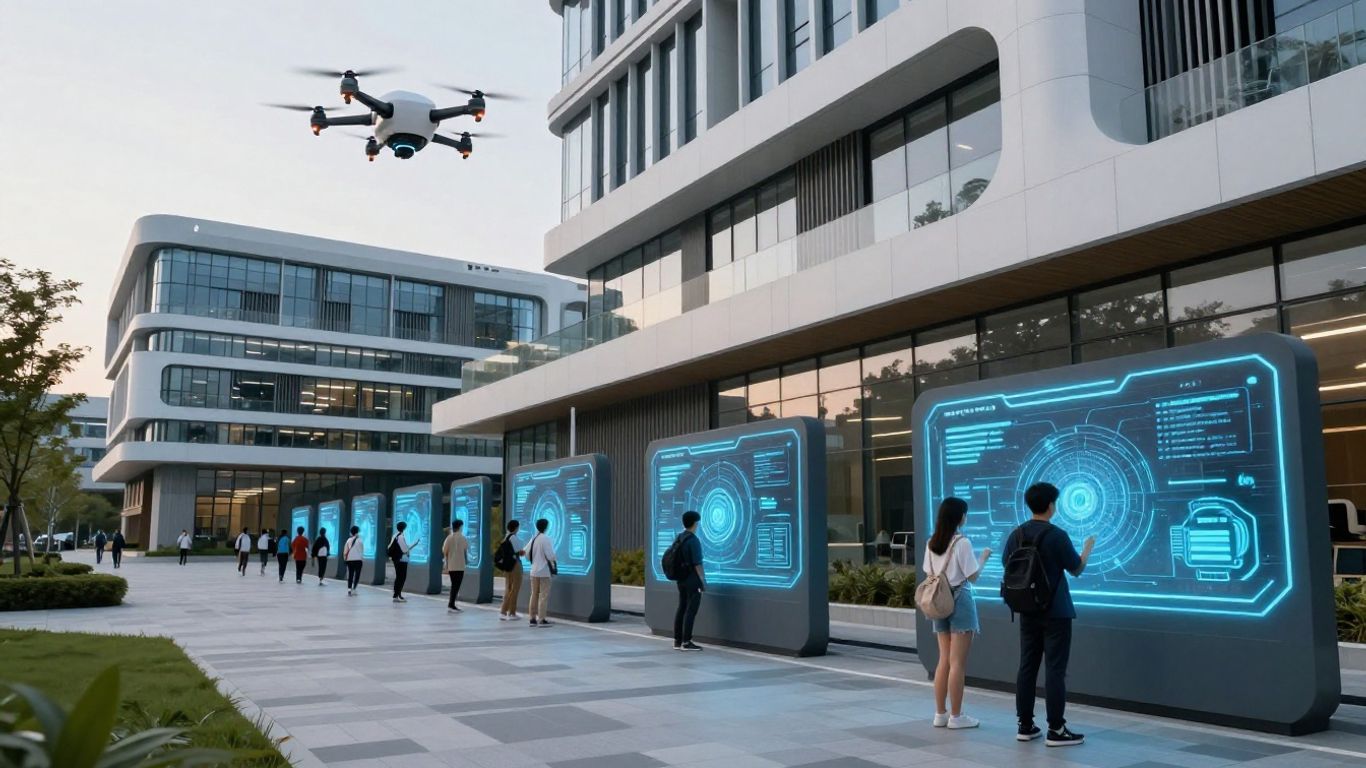
Bringing a smart campus to fruition is far from being a simple matter of selecting the latest technological gadgets; it's an intricate process fraught with various hurdles that must be meticulously cleared. Many institutions frequently encounter significant obstacles as they endeavor to integrate these advanced systems. Indeed, the journey towards a truly connected campus demands meticulous planning and a pragmatic approach to anticipating and addressing potential roadblocks.
Addressing High Implementation Costs
One of the most immediate and pressing concerns revolves around the associated financial outlay. Establishing comprehensive smart campus solutions often requires a substantial upfront investment. This encompasses not only the acquisition of hardware and software but also the essential upgrades to existing infrastructure, such as bolstering network capabilities and expanding data storage. For numerous universities, particularly those operating with more constrained budgets, securing the necessary funding for these large-scale projects can prove to be a formidable challenge. It's quite common for institutions to phase in these technologies over an extended period to effectively manage the financial impact.
Overcoming Technical and Infrastructure Barriers
Beyond the financial considerations, institutions frequently face a myriad of technical difficulties. Older campus buildings, for instance, may lack the requisite wiring or power capacity to support modern systems. Moreover, integrating diverse technologies from multiple vendors can often lead to vexing compatibility issues, resulting in a disparate patchwork of systems that don't always communicate seamlessly. Therefore, universities require robust IT departments equipped with the specialized skills necessary to manage these complex integrations and ensure that all components function reliably in concert.
Ensuring Faculty and Staff Readiness
Technology, however advanced, is only truly effective if the individuals who use it are both comfortable and proficient. A significant challenge lies in securing the enthusiastic participation of faculty and staff. Some individuals may understandably be hesitant to adopt new tools, fearing they will be overly complicated or that the technology might, in fact, diminish their roles. Providing comprehensive training and transparent communication about the tangible benefits of smart campus solutions is absolutely crucial for building confidence and fostering widespread adoption. This approach should actively demonstrate how these tools can genuinely simplify and enhance their professional responsibilities, rather than simply introducing another layer of complexity.
The transition to a smart campus is, unequivocally, a marathon, not a sprint. It demands a clear overarching vision, sustained investment, and an unwavering commitment to supporting the very people who will utilize the technology on a daily basis. Without diligently addressing these core challenges, the full transformative potential of smart campus initiatives may unfortunately remain elusive.
Looking Ahead: The Evolving Smart Campus
As we've explored, smart campus solutions are undeniably ushering in a transformative era for higher education. This isn't merely about incorporating cutting-edge technology; it’s fundamentally about enriching college life for students and simplifying the operational complexities for university administration. From optimizing energy consumption to providing tailored support for students, these innovative tools are consistently making campuses more efficient, more responsive, and ultimately, more future-ready. As technology continues its relentless march forward, we can confidently anticipate even more inventive approaches for universities to adapt, evolve, and continuously improve. The journey towards achieving a truly intelligent campus is, by its very nature, ongoing, but the profound benefits for learning, operational excellence, and the holistic student experience are becoming clearer and more compelling with each passing day.
Frequently Asked Questions
What exactly is a smart campus?
A smart campus can be understood as a modernized university environment that leverages advanced technology to optimize operations and deliver a more personalized experience for students and faculty. Essentially, it upgrades traditional campus infrastructure with intelligent tools to facilitate learning, working, and living more seamlessly.
How does technology help students and teachers?
Technology offers numerous benefits! For students, it provides immediate assistance through chatbots, offers personalized academic and career guidance, and even delivers instant feedback on coursework. For educators, it streamlines class management and provides deeper insights into student learning patterns, enhancing instructional effectiveness.
Is AI used in smart campuses?
Yes, Artificial Intelligence (AI) constitutes a core component of smart campuses. AI plays a significant role in improving student learning outcomes, ensuring smoother campus operations, and even bolstering campus safety protocols. It essentially functions as an intelligent assistant for the entire university ecosystem.
How do smart campuses help the environment?
Smart campuses actively contribute to environmental sustainability by utilizing technology for optimized energy management—for instance, ensuring lights and heating are activated only when necessary. They can also predict equipment maintenance needs before failures occur, conserving resources and minimizing waste. This proactive approach significantly enhances the campus's eco-friendly profile.
Are smart campuses safe?
Indeed, smart campuses prioritize safety by deploying advanced technologies such as AI-powered surveillance systems and sophisticated data analytics. These tools aid in incident prevention and enable rapid response to emergencies, thereby fostering a more secure environment for everyone on campus.
Is it hard for colleges to become smart campuses?
The transition to a smart campus can present challenges, primarily due to the associated costs, the integration of new technologies, and the necessity for staff training. Institutions must plan diligently to ensure that all stakeholders are prepared and capable of effectively utilizing the new tools.


