
resources-malaysia
Understanding Malaysia GDP Per Capita: Trends and Economic Outlook
Industry Expert & Contributor
18 Oct 2025

So, you're curious about Malaysia's GDP per capita? In simple terms, it's a way to measure the country's economic health on a per-person basis. We'll take a look at its journey over the years, peek at what experts predict for the future, and explore what makes the Malaysian economy tick. It paints a fascinating picture of a nation that has grown remarkably and is still striving for an even stronger economic future. Let's dive in.
Key Takeaways
- Since 1960, Malaysia's GDP per capita has charted a remarkable course, climbing from a low of $1,266.32 to an estimated $11,868.36 in 2024, with projections pointing towards continued growth.
- As a newly industrialised nation, the country boasts a diversified economy—strong in manufacturing and services—and holds a vital position in global supply chains, especially within the electronics sector.
- Reflecting this economic progress, the average household income has seen a substantial increase, and some forecasts suggest Malaysia could become a major global economy by the middle of this century.
- This growth is largely powered by its dynamic manufacturing and services sectors, government initiatives championing high-tech industries, and deep integration into global trade through pacts like RCEP and CPTPP.
- The nation is firmly on the path to achieving high-income status, focusing on productivity, inclusivity, and smart fiscal and monetary policies to sustain its economic transformation.
Malaysia GDP Per Capita: Historical Overview
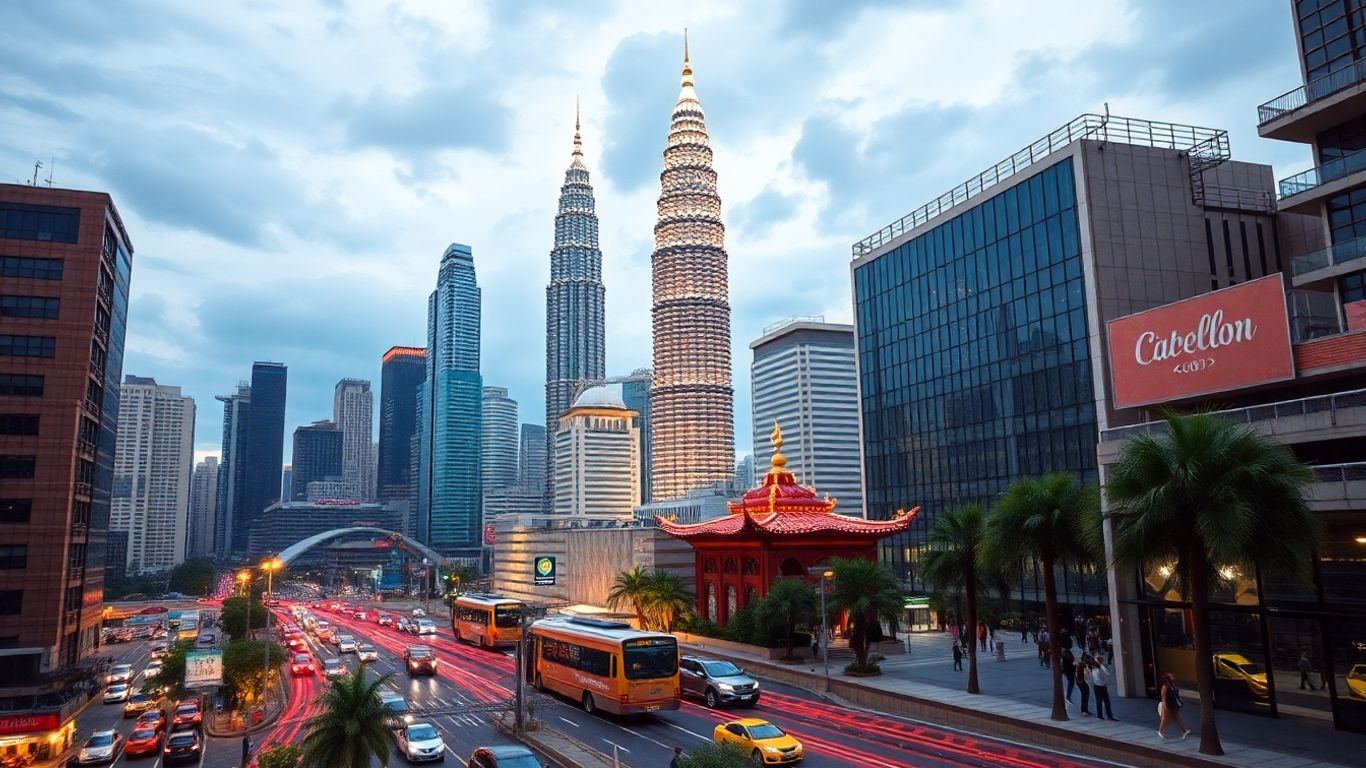
Evolution of Malaysia GDP Per Capita Since 1960
Malaysia's economic story since 1960 is nothing short of a significant transformation. Starting from a much more modest base, the country has diligently worked its way up the economic ladder. Back in 1960, the GDP per capita stood at around $1,266. Fast forward to today, and that figure has multiplied several times over—a clear testament to the nation's development and its successful integration into the global economy.
Record Highs and Lows in Malaysia's Economic Journey
Looking at the numbers, Malaysia's economic journey has certainly had its share of peaks and valleys, though the overall trend has been consistently upward. The lowest point recorded in the data dates back to the early 1960s, hovering around $1,266 per person. On the flip side, recent years have showcased a much more robust performance. For instance, in 2024, the GDP per capita climbed to approximately $11,868, demonstrating a remarkable leap over the decades.
Here’s a quick glance at some of the key figures:
- 1960: Approximately $1,266 (Record Low)
- 2024: Approximately $11,868 (Recent High)
- Average (1960-2024): Around $5,391
Malaysia's GDP Per Capita Against Global Averages
So how does Malaysia stack up against the rest of the world? Generally, it holds its own quite well. In 2024, for example, Malaysia's GDP per capita was about $12,620, which was a notch above the global average of roughly $10,589 at the time. This places Malaysia in a respectable position on the world stage, reflecting its status as a dynamic and growing economy.
Malaysia's economic progress over the past few decades has been truly substantial, evolving from a developing nation into a newly industrialised one. This upward trajectory in its GDP per capita is a powerful testament to its economic policies and savvy integration into global markets.
Projected Malaysia GDP Per Capita Trends
Looking ahead, Malaysia's economic path points towards continued growth in its GDP per capita. While past performance offers a solid foundation, it's the future that truly sparks conversation. The general consensus among economists is positive, with expectations of a steady climb in the average income per person.
Short-Term Forecasts for Malaysia's GDP Per Capita
For the immediate future—say, the next year or two—forecasts suggest a modest yet consistent increase. We're looking at figures that are expected to tick upwards, reflecting the country's ongoing economic activity and development projects.
- 2025: Projections point to a GDP per capita of around $12,414.
- 2026: This is expected to rise further, potentially reaching about $12,961.
- 2027: The upward trend is set to continue, with estimates suggesting a figure around $13,570.
These figures aren't just plucked from thin air; they are based on sophisticated models that aim to account for a wide range of economic variables.
Long-Term Economic Projections for Malaysia
When we zoom out for a long-term view, the picture becomes even more compelling. Malaysia has been on a developmental journey for decades, and this is expected to keep shaping its economic standing for years to come.
Some reports even suggest that by mid-century, Malaysia could rank among the world's larger economies, with a significant leap in income per person. This kind of long-term vision is built on a foundation of sustained growth and strategic adaptation.
Factors Influencing Future Malaysia GDP Per Capita
So, what’s driving these projections? It's really a combination of several factors. The nation's strong manufacturing base, particularly in electronics and semiconductors, plays a huge part. On top of that, the ever-expanding services sector is contributing more and more to the national income. Government policies aimed at nurturing high-tech industries and attracting foreign investment are also crucial pieces of the puzzle.
Here are some of the key influences at play:
- Global Trade Dynamics: As a key player in global supply chains, Malaysia's economy is directly influenced by international demand for its goods and services.
- Investment in Technology: The push towards higher-value manufacturing and digital services is set to boost both productivity and income levels.
- Domestic Consumption: A growing middle class and stable household incomes provide strong support for local demand, which is a vital component of the economy.
- Policy Implementation: The effectiveness of the government in implementing its economic strategies and reforms will, of course, be a major determining factor.
Malaysia's Economic Landscape and GDP Per Capita
Malaysia has truly come a long way, transforming itself into what is now recognised as a newly industrialised nation. It's quite impressive when you consider where the country started and where it stands today. This economic journey has been defined by substantial growth, and its GDP per capita is a clear reflection of this progress. This upward trajectory stands as a testament to its strategic economic policies and remarkable adaptability.
Malaysia's Status as a Newly Industrialised Nation
Malaysia is often described as a newly industrialised country, and for good reason. It has successfully shifted from an economy that once relied heavily on raw materials to one with robust industrial and service sectors. This evolution has directly elevated its standing on the global stage. The nation's focus on manufacturing—especially in electronics and semiconductors—has been a primary engine of this growth. It’s not just about producing goods; it's about climbing the value chain to create more complex and valuable products. This industrialisation has been instrumental in boosting the nation's overall economic output and, in turn, its GDP per capita.
Impact of Household Income on Economic Metrics
When we discuss GDP per capita, it's also insightful to look at what's happening at the household level. The average household income in Malaysia has enjoyed a healthy increase over the years. Between 2012 and 2022, for instance, there was a significant jump in monthly household income. This rise means people have more purchasing power, which fuels domestic demand and contributes to broader economic activity. It's a virtuous cycle: rising incomes support economic growth, and that growth helps to raise incomes further. This is a very positive sign for the overall health of the economy.
Future Economic Standing and Income Per Capita
Looking to the horizon, Malaysia is well-positioned to continue its economic ascent. Projections suggest that its GDP per capita will keep climbing, with analysts expecting the figures to reach new heights in the coming years, signalling a sustained period of economic expansion. This growth is anticipated to be driven by several factors, including ongoing industrial development, a resilient services sector, and strategic government policies designed to attract investment and foster innovation. The country's economic outlook appears bright, with expectations of deeper integration into global supply chains and a stronger position in the international market. World Bank data indicates a steady increase, with GDP per capita projected to reach around $12,414 by the end of 2025. You can explore historical data and future projections for Malaysia's GDP per capita.
The transformation from an agriculture-based economy to a manufacturing and services powerhouse has been nothing short of remarkable. This shift has not only bolstered the nation's wealth but has also improved the standard of living for many Malaysians. The focus now is on sustaining this momentum and advancing towards even higher value-added activities.
Key Economic Indicators for Malaysia
To truly grasp Malaysia's economic health, we need to look at a few key numbers. These indicators provide a snapshot of how the country is performing right now and where it might be heading. It’s not about a single figure, but rather how different parts of the economy are working in concert.
Nominal GDP and its Relation to GDP Per Capita
Think of Nominal GDP as the total price tag for all goods and services produced in Malaysia, measured at current market prices. It’s a big number that shows the overall size of the economy. When we take this total and divide it by the population, we get the GDP per capita—a figure that gives us a clearer picture of the average economic output for each person.
For 2025, Malaysia's nominal GDP is projected to be around $484.6 billion. Dividing that by an estimated population of 34.2 million gives us a nominal GDP per capita of about $14,170. This number is important as it helps us compare Malaysia's economic performance with other countries on a more level playing field, even if their total GDPs are vastly different.
Average Real GDP Growth Trends
Real GDP growth offers a more accurate measure of economic expansion because it adjusts for inflation. In essence, it tells us if the economy is actually producing more goods and services, not just if prices have increased. Malaysia has enjoyed fairly steady growth over the years, which is a positive sign.
Looking ahead, forecasts point to a growth rate of around 5.0% for 2025. This follows an estimated 5.1% in 2024 and 3.6% in 2023. While fluctuations are normal, these figures indicate a healthy and expanding economy.
Comparison of Malaysia's GDP Per Capita with Global Benchmarks
When we examine Malaysia's GDP per capita, it's useful to see how it measures up against global benchmarks. The projected nominal GDP per capita of $14,170 for 2025 places Malaysia in a solid position internationally.
Here’s a quick comparison:
- Global Rank (Nominal GDP Per Capita, 2025 est.): 66th
- Global Rank (PPP GDP Per Capita, 2025 est.): 51st
This shows that while Malaysia isn't at the very top of the list, it's performing quite well compared to many other nations. It's firmly classified as an upper-middle-income economy, a status that reflects decades of progress.
Malaysia's economic journey has been one of profound transformation. From its early days, it has evolved into a more diversified and industrialised economy. This progress is clearly reflected in its growing GDP per capita, which signals an improving standard of living for its citizens, on average.
When viewed together, these indicators paint a picture of an economy that is growing and developing, with a clear trajectory towards achieving high-income status. It's a complex landscape, but these key numbers help us understand the major trends.
Malaysia's Diversified Economy and Global Trade
Malaysia has always been clever about not putting all its economic eggs in one basket, which is a very smart strategy. Instead of relying on a single industry, it has cultivated a strong mix of manufacturing, services, and even commodities. This diversification has been a cornerstone of its growth over the years.
The country has strategically positioned itself as a crucial player in global supply chains, particularly in semiconductor production, where it commands a significant share of global chip assembly and testing. It's a true manufacturing and trade powerhouse, with exports accounting for a massive portion of its GDP—over 60% by some estimates. Key export earners include electronics, palm oil, petroleum, and rubber. It's no surprise, then, that Malaysia is a major participant in trade agreements like RCEP and CPTPP, which further cements its role in the global marketplace.
Strengths in Manufacturing and Services Sectors
For a long time, manufacturing has been the backbone of the economy, with electronics and electrical products leading the charge. But the services sector is certainly no slouch; it has grown to contribute more than half of the country's GDP. Kuala Lumpur, for example, has emerged as a significant regional financial hub, while tourism consistently brings in substantial business and creates jobs. It's a well-rounded and balanced approach.
Malaysia's Role in Global Supply Chains
Thanks to its strategic location and well-developed infrastructure, Malaysia is a natural fit for global supply chains. It's not just about production; it's about being a dependable link in a complex international network. The country is especially strong in the assembly and testing of semiconductors, a critical component in the tech world. This deep integration means Malaysia benefits from global demand, though it also makes it sensitive to global economic shifts.
Impact of Trade Agreements on Economic Growth
Trade agreements act like economic superhighways, and Malaysia has been actively building them. Being part of pacts like the Regional Comprehensive Economic Partnership (RCEP) and the Comprehensive and Progressive Agreement for Trans-Pacific Partnership (CPTPP) opens up vast new markets and opportunities. These agreements help lower trade barriers, making it easier for Malaysian goods and services to reach international customers. It's all about facilitating smoother trade and fostering greater economic growth.
Malaysia's economy is notably open and rests on a strong industrial base. This enables it to participate actively in international trade, which in turn fuels its economic expansion. The government's dual focus on enhancing both its manufacturing capabilities and its service industries is a key strategy for maintaining this momentum and ensuring continued prosperity.
Drivers of Economic Growth in Malaysia
Over the years, Malaysia's economy has undergone some serious shifts, moving from a primary focus on agriculture and mining to a much more complex and modern structure. Its forward momentum isn't driven by a single engine but by a dynamic mix of different sectors working together. The government has been proactive in ensuring this growth continues, particularly by championing new technologies and promoting inclusive development.
Contribution of Services to National GDP
The services sector has become a real powerhouse for Malaysia's economy. It's no longer just about manufacturing; industries like finance, tourism, and communications are now generating significant revenue and employment. This sector currently accounts for more than half of the country's total GDP—a massive change from how things were in the past.
- Finance and Insurance: Kuala Lumpur is steadily growing as a major financial hub in the region.
- Tourism: With its diverse culture and stunning natural beauty, the country remains a magnet for international visitors.
- Information and Communication Technology (ICT): This area is expanding rapidly as more of the economy and society goes digital.
Government Initiatives for High-Tech Industries
Malaysia isn't just keeping pace; it's actively striving to become a leader in high-tech fields. The government has rolled out strategic plans, such as the New Industrial Master Plan (NIMP) 2030, to bolster manufacturing and encourage the growth of advanced industries. The clear goal is to increase the production and export of high-value products.
The core strategy is to move up the value chain. This means Malaysia aims to produce more sophisticated goods and services that can command higher prices on the global market. This requires investment in research, development, and training to cultivate a skilled workforce capable of handling complex technological processes.
Factors Supporting Steady Economic Growth
Several key factors are helping to keep Malaysia's economy on a steady course. Its strong foothold in global trade is a major advantage, especially its crucial role in electronics manufacturing. Furthermore, the nation has been dedicated to making its economy more inclusive, ensuring that the benefits of growth are shared more widely. This involves policies designed to improve productivity and ensure that all segments of society can participate in and benefit from economic progress.
| Sector | Contribution to GDP (Approx.) | Key Products/Services |
|---|---|---|
| Manufacturing | Over 40% | Electronics, palm oil products, petroleum |
| Services | Over 50% | Finance, tourism, ICT, wholesale and retail trade |
| Agriculture/Mining | Remaining | Palm oil, rubber, tin (historically significant) |
Malaysia's Path to High-Income Nation Status
For decades, Malaysia has been on an impressive economic journey. It has successfully transitioned from an economy reliant on agriculture and raw materials to a more complex and modern one. This strategic shift has paid off handsomely, with its GDP per capita now comparing favourably to some developed countries and poverty levels having dropped significantly. The nation has also proven its resilience, bouncing back even in the face of global economic challenges.
Historical Growth and Economic Transformation
Cast your mind back to the 1980s. Malaysia began to study the success stories of places like South Korea and Singapore, with the idea of moving from mining and agriculture into manufacturing. This wasn't a minor adjustment; it was a major strategic pivot. Fueled by significant investment, especially from Japan, factories began to spring up, and soon, exports became the primary engine of growth. For a long stretch in the 80s and 90s, Malaysia experienced growth rates exceeding 7% with low inflation—a period of true economic transformation.
Strategies for Productivity and Inclusivity
To continue its upward trajectory and achieve high-income status, Malaysia is focusing on a couple of key areas. The first is boosting productivity. This means ensuring that workers and businesses operate as efficiently as possible, often through better training and the adoption of new technologies. The second major focus is inclusivity. The aim is to ensure that economic gains are shared more broadly across the population, rather than being concentrated in a few areas or among certain groups. This involves policies geared towards reducing income disparities and creating opportunities for all.
Fiscal and Monetary Policy Considerations
Prudent economic management is also a critical part of the plan. The government has been working to strengthen its finances, for instance, by reforming subsidies and introducing taxes like the Goods and Services Tax. On the monetary front, priorities include keeping inflation in check and maintaining a stable financial system. These policies are designed to create a predictable environment where businesses feel confident to grow and invest—exactly what’s needed to propel the economy to higher income levels. The New Industrial Master Plan 2030 is a recent example of this, setting ambitious targets for the manufacturing sector's GDP contribution, employment, and median salaries.
Malaysia's economic strategy has revolved around a deliberate shift from commodity dependence to a diversified industrial base, supported by strategic investments and a focus on export-led growth. This transformation has been reinforced by consistent efforts to enhance productivity and ensure that economic progress benefits a wider segment of society, all while maintaining prudent fiscal and monetary policies aimed at stability and sustainable development.
Wrapping Up: Malaysia's Economic Journey
So, when we take a step back and look at the big picture of Malaysia's GDP per capita, it's clear the country has come a very long way. From its early days, it has transformed into a more industrialised nation with a resilient economic foundation. The numbers point to steady growth, and forecasts suggest this trend is set to continue, although there will always be challenges to navigate. Global trade dynamics and the race to adopt new technologies are huge factors. But overall, Malaysia appears to be on a promising path, steadily working to improve the standard of living for its people. It's a compelling story of development, and it will be interesting to see what the next chapter holds.
Frequently Asked Questions
What is Malaysia's GDP per capita, and how does it compare globally?
Malaysia's GDP per capita is the country's total economic output divided by its population. In 2024, it was around $11,868. This figure is higher than the world average, which means that, on average, Malaysians produce and earn more than people in many other nations. Think of it like a class project—our country's contribution per person is quite strong!
How has Malaysia's GDP per capita changed over the years?
The economy has grown tremendously since the 1960s. Back then, the GDP per capita was much lower, at about $1,266. Over the decades, it has steadily climbed, reaching a recent high of around $11,868 in 2024. This shows Malaysia's successful journey from a developing nation to a modern, industrialised one.
What's the forecast for Malaysia's GDP per capita in the coming years?
Most experts are optimistic and predict that Malaysia's GDP per capita will continue to grow. It's expected to reach approximately $12,414 by the end of 2025 and continue rising in the years that follow. This suggests that the country's economy is on track to become even stronger.
What are the main drivers of Malaysia's economy?
Malaysia's economy is quite diverse, which is one of its strengths. It has a robust manufacturing sector, particularly in electronics, and also thriving service industries like finance, digital services, and tourism. The country is also a major player in international trade, exporting its products all over the globe.
Is Malaysia classified as a developed country?
Malaysia is often referred to as a 'newly industrialised country' or an 'upper-middle-income economy.' This means it has made significant development progress and shares many characteristics with developed nations, but it isn't officially there yet. The government's goal is to achieve 'high-income nation' status in the near future.
How is household income connected to GDP per capita in Malaysia?
Household income is the average amount of money a family in Malaysia earns. When families earn more, they tend to spend more, which helps fuel economic growth. In Malaysia, average household income has increased significantly over time, which is a positive sign that contributes to a higher GDP per capita.
Share

Peyman Khosravani
Industry Expert & Contributor
Peyman Khosravani is a global blockchain and digital transformation expert with a passion for marketing, futuristic ideas, analytics insights, startup businesses, and effective communications. He has extensive experience in blockchain and DeFi projects and is committed to using technology to bring justice and fairness to society and promote freedom. Peyman has worked with international organisations to improve digital transformation strategies and data-gathering strategies that help identify customer touchpoints and sources of data that tell the story of what is happening. With his expertise in blockchain, digital transformation, marketing, analytics insights, startup businesses, and effective communications, Peyman is dedicated to helping businesses succeed in the digital age. He believes that technology can be used as a tool for positive change in the world.


