
resources
Unlocking Efficiency: How Smart Factory Connectivity Transforms Modern Manufacturing
05 Oct 2025

Manufacturing is undoubtedly undergoing a rapid transformation. At the very core of this paradigm shift lies smart factory connectivity, a revolutionary approach that empowers factories to seamlessly link machines, personnel, and intricate systems in unprecedented ways. What does this mean in practical terms? It translates into a wealth of real-time data, enabling faster, more informed decisions and significantly smoother operational flows. Rather than relying on mere conjecture about potential malfunctions or simply waiting for equipment to fail, connected factories boast the capability to proactively identify issues early, rectify them swiftly, and maintain continuous, optimal performance. This evolution isn't just about integrating novel technologies; it's profoundly about enhancing the ease and reliability of work for everyone on the shop floor. If you've ever pondered how today's factories are becoming so much more agile and intelligent, the answer invariably begins with superior interconnections.
Key Takeaways
- Smart factory connectivity intelligently integrates machines, people, and systems, making real-time data acquisition and utilization a tangible reality.
- The strategic deployment of IoT sensors and robust cloud networks empowers factories to detect problems proactively, thereby extending equipment longevity and operational uptime.
- Sophisticated analytics and artificial intelligence (AI) algorithms adeptly convert raw, extensive data into actionable insights, proving invaluable for strategic planning and rapid problem resolution.
- To safeguard the integrity and dependability of increasingly interconnected factories, the implementation of stronger networks and advanced cybersecurity measures is absolutely essential.
- Ultimately, connected factories significantly enhance worker performance by providing instant access to critical real-time information and streamlining communication channels.
Foundations of Smart Factory Connectivity in Modern Manufacturing
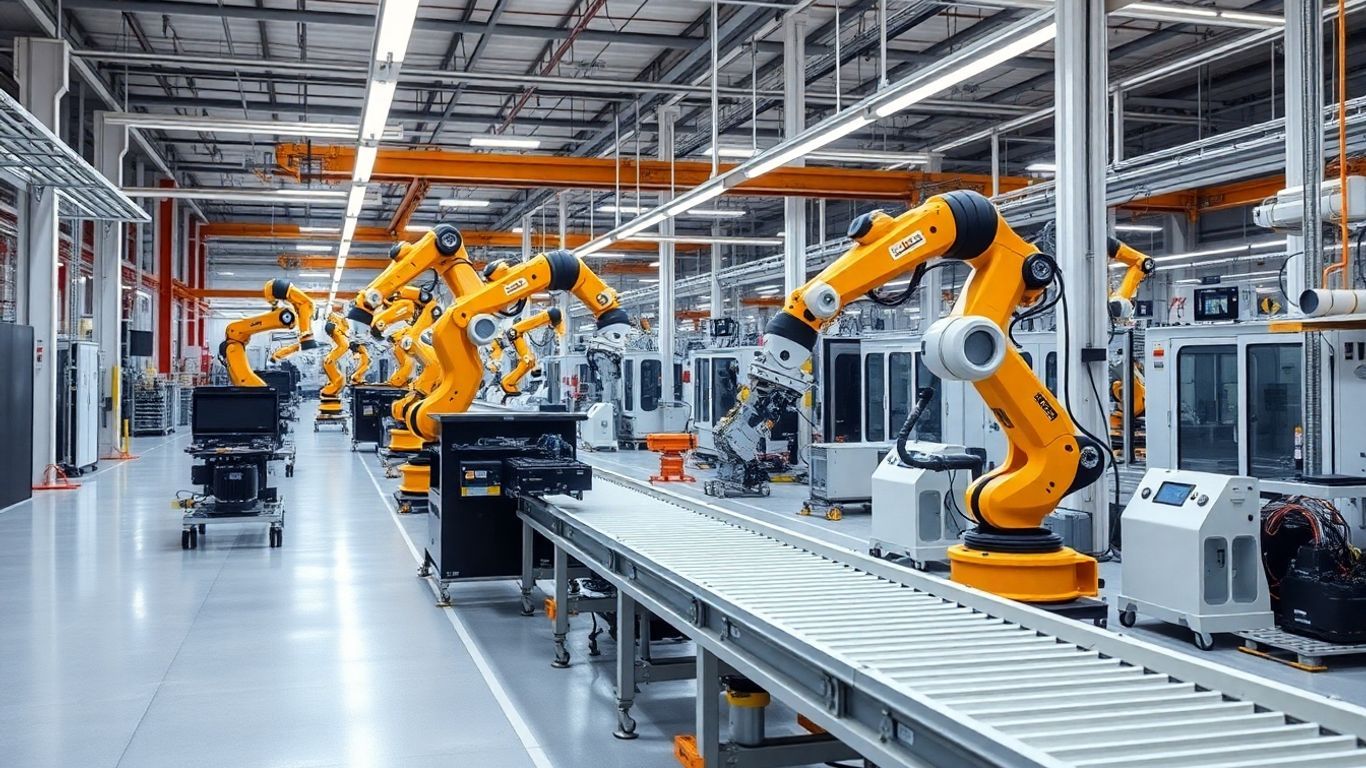
It's important to understand that smart factories aren't merely repositories of high-tech gadgets; rather, they are meticulously engineered on a foundational framework that expertly fuses technology, data, and human ingenuity into one cohesive, highly responsive operational system. In this particular section, we'll navigate through the principal components that converge to facilitate the most efficient and adaptable manufacturing operations we see flourishing today.
Key Technologies Behind Connected Factories
When you observe a truly smart factory in action, what you're witnessing is an intricate interplay of multiple technological layers, all harmoniously synchronized. These sophisticated systems collectively forge a genuinely connected environment that not only enables real-time decision-making but also drives profound process optimization. Here's a breakdown of these essential building blocks:
- Internet of Things (IoT): By attaching sensors to machinery and equipment, IoT generates continuous streams of invaluable data—think of it as giving a voice to every piece of hardware.
- Cloud Computing: This fundamental component ensures that data and applications are accessible from virtually anywhere, a critical feature for remote monitoring and dynamically scaling resources as demand fluctuates.
- AI and Machine Learning: These potent tools don't just collect data; they actively derive meaning from it, identifying intricate patterns, predicting outcomes, and even automating corrective actions or crucial improvements.
- Advanced Wireless Networks: Encompassing technologies like 5G, Wi-Fi 6, and edge computing, these networks dramatically enhance connectivity, making the near-instantaneous transfer of vast data volumes a practical reality.
| Core Technology | Main Benefit |
|---|---|
| IoT Sensors | In-depth insight into equipment health and operational efficiency |
| Cloud Infrastructure | Flexible, scalable storage and significant computing power |
| AI/Machine Learning | Intelligent, automated analysis and actionable operational guidance |
| Advanced Wireless | Unprecedented rapid communication and enhanced scalability |
It’s also worth noting that integrating smart technology into older, existing equipment typically involves a process known as retrofitting—adding sensors and bridging those machines with modern infrastructure. This thoughtful blend allows businesses to evolve their operations gracefully, without the prohibitive cost of scrapping valuable assets prematurely.
The Role of IoT and Cloud Infrastructure
Honestly, it would be nigh impossible to envision a truly connected factory without the indispensable contributions of IoT devices and the robust framework of the cloud. IoT diligently gathers real-time information directly from production lines, while the cloud, in turn, provides an essential central hub where all this data can be meticulously analyzed and securely stored. Beyond storage, the cloud inherently offers tremendous flexibility, significantly simplifying tasks such as scaling operations up or down during periods of peak demand. These interconnected systems are also instrumental in monitoring vital conditions like temperature, vibration, or even the precise location of assets, thereby bolstering both equipment maintenance strategies and overall product quality. For those curious about the broader integration trends, the ongoing dialogue on ERP integration in manufacturing clearly highlights how IoT and cloud tools are becoming increasingly pivotal across the entire industrial landscape.
Building a Digital Ecosystem for Manufacturing
Imagine a smart factory not merely as a collection of machines, but as a vibrant, living network—where machines, various systems, and the human workforce all function as integral parts of a larger, interconnected digital organism. What are the key elements that help construct such a sophisticated ecosystem? Let's delve into them:
- The seamless integration of diverse systems, spanning from enterprise resource planning (ERP) at the top to individual machines directly on the factory floor.
- The establishment of a unified data platform designed to link everything together, ensuring easy monitoring and sophisticated analytics capabilities.
- The implementation of secure communication protocols, rigorously protecting all data as it flows between devices, across facilities, and through cloud services.
Crafting this robust digital ecosystem transcends mere technological deployment. It's fundamentally about harmonizing all facets of the business, making critical information readily accessible, and establishing a structured environment where every improvement can be realized more rapidly and with reduced effort.
With these foundational principles firmly in place, any factory—regardless of its size—can confidently embark on the journey toward smarter, more profoundly connected manufacturing. These initial steps truly set the stage for groundbreaking advancements in efficiency, adaptability, and, crucially, long-term competitiveness.
Enabling Real-Time Insights With Industrial Internet of Things
At their core, smart factories excel at responding swiftly and intelligently to the dynamic realities unfolding on the shop floor. The Industrial Internet of Things (IIoT) stands as the undeniable linchpin of this transformative shift, empowering manufacturers to observe, quantify, and deeply comprehend every facet of production as it happens—in real time.
Integrating Sensors Across Production Lines
The efficacy of IIoT fundamentally hinges on the deployment of sophisticated sensors that assiduously gather incredibly detailed information, moment by moment. These intelligent sensors are strategically affixed to a wide array of assets, from individual machines and conveyor belts to advanced robotics and even individual workstations. They meticulously record vital parameters such as temperature, vibrational patterns, pressure, and operational speed.
Effectively integrating sensors across an entire production line represents the inaugural, yet critical, stride toward achieving genuine real-time visibility throughout the manufacturing process.
- Sensors fundamentally transform traditional, static equipment into dynamic, data-generating assets, offering unprecedented insights.
- The comprehensive collection of data from every stage of manufacturing is instrumental in anticipating and preventing costly bottlenecks.
- Strategically positioned sensors possess the remarkable ability to instantly detect anomalies or potentially unsafe conditions, promptly triggering alarms or even halting operations to avert larger, more significant issues.
With an array of smart sensors diligently at work, production teams can confidently move beyond speculative guesswork. They gain immediate, unequivocal knowledge of whether operations are proceeding smoothly and, if not, can intervene decisively before minor issues escalate into financially draining problems.
Capturing and Analyzing Machine Data
Gathering vast quantities of data is merely the first part of the equation; that data must then be meticulously processed and rendered actionable. IIoT platforms are specifically designed to collect and systematically organize this raw information, making it readily available for real-time monitoring, comprehensive performance analysis, and detailed reporting. What kind of data are we talking about? Often, this crucial information includes metrics such as:
| Metric | Example Value | Why It Matters |
|---|---|---|
| Machine Downtime | 8 min/day | Clearly reveals underlying efficiency problems and areas for improvement |
| Cycle Time | 48 sec/item | Allows for precise tuning and optimization of production processes |
| Energy Use | 720 kWh/shift | Identifies significant potential for cost savings and resource conservation |
- IIoT systems often feature intuitive dashboards that present live statistics, historical trends, and crucial automated alerts, keeping teams fully informed.
- Operators and managers are liberated from waiting until the end of a shift or poring over antiquated paper-based reports to grasp ongoing operations.
- The ability for rapid analysis empowers teams to make superior decisions right away, fundamentally shifting from reactive problem-solving to proactive, informed intervention.
Predictive Maintenance Through Connectivity
Among the most compelling advantages of IIoT is its capacity to transition maintenance strategies from rigid, scheduled routines to far more intelligent, predictive approaches. By leveraging constant streams of granular information, IIoT platforms can pinpoint subtle signs of wear or impending failure well in advance.
So, how does IIoT-based predictive maintenance typically function in practice? Let's outline the process:
- Sensors diligently monitor machinery around the clock, tracking critical parameters like vibration signatures, temperature fluctuations, or the status of lubrication systems.
- Sophisticated data analytics then compare these new readings against extensive historical data, meticulously identifying emerging trends such as a gradual rise in temperature or abnormal vibrational patterns.
- Crucially, the system proactively warns operators *before* equipment actually breaks down—for instance, it might signal that a conveyor belt is nearing the end of its operational life and requires attention.
The benefits derived from this approach are substantial:
- A significant reduction in unplanned downtime, as necessary repairs are meticulously performed *before* catastrophic breakdowns occur.
- Substantially lower maintenance costs, achieved by intelligently avoiding unnecessary, time-based maintenance work.
- A marked decrease in wasted time and precious materials, optimizing resource utilization.
Rather than operating machinery until it catastrophically fails or adhering to inflexible, arbitrary schedules, modern factories can now precisely address maintenance needs exactly when they're required—never too soon, never too late.
Without a doubt, Industrial IoT is fundamentally reshaping factory operations, delivering actionable information in real time and enabling personnel at every organizational tier to work with greater intelligence and efficiency.
Enhancing Manufacturing Agility and Efficiency Through Connectivity
Constructing a truly connected factory extends far beyond the simple act of linking machines or computers together. It fundamentally redefines how a factory adapts to fluctuating demand, effectively manages unforeseen problems, and meticulously maximizes the output from every available resource. When critical production data flows instantaneously between diverse systems, dedicated workers, and astute managers, the entire plant gains the ability to respond not only faster but also with significantly greater intelligence. Let's explore how this transformative principle manifests across several pivotal areas:
Optimizing Workflows and Scheduling
- Smart scheduling tools now seamlessly synchronize with live production data, allowing for dynamic adjustments to shifts, maintenance routines, or supply chain needs *before* potential issues even have a chance to materialize.
- Automated planning systems actively work to minimize idle time and reduce changeover complexities, making it considerably easier to manage multiple product runs or accommodate last-minute order modifications.
- Teams are no longer beholden to formal status meetings—everyone can tap into the same real-time dashboards, whether they're actively working on the factory floor or coordinating from the office.
| Benefit | Traditional Factory | Connected Factory |
|---|---|---|
| Scheduling Changes | Hours or Days | Mere Minutes |
| Data Access | Manual, Delayed Reports | Real-Time, Instant Dashboards |
| Response to Problems | Primarily Reactive | Fundamentally Proactive |
Reducing Downtime and Waste
- Connectivity provides managers with the immediate capability to pinpoint emerging issues—be it a motor showing signs of failure or a developing supply bottleneck—crucially, *before* they can force production to grind to a halt.
- Sensors and intelligent monitors are constantly flagging process drifts that could potentially lead to defects, ensuring that corrective adjustments are made both swiftly and precisely.
- Less frantic scrambling directly translates to fewer urgent repairs and a reduction in costly rush orders, both of which invariably inflate expenses and disrupt carefully planned schedules.
Leveraging live data, modern plants adeptly transition from merely reacting to breakdowns to proactively preventing them, thereby significantly curtailing costly downtime and minimizing waste well before it begins.
Supporting Continuous Improvement Initiatives
- Every single cycle, from the initial ordering of raw materials right through to the production of the finished product, now generates comprehensive digital records ripe for analysis.
- Teams can swiftly identify recurring trends or persistent problems, then—and this is key—test innovative solutions and meticulously track their results, making improvement a measurable science, not an educated guess.
- The ready availability of information actively encourages even minor fixes and optimizations, which, when aggregated over time, lead to substantial gains that traditional factory setups simply cannot replicate.
Three Steps to Continuous Improvement in a Connected Factory:
- Collect: Automatically gather process, machine, and quality data with unwavering precision.
- Analyze: Rapidly identify underlying patterns and the root causes of any emerging issues.
- Act: Implement necessary changes and rigorously measure their effectiveness and sustained impact.
Ultimately, these interconnected systems don't just accelerate the pace of work—they fundamentally enable the identification and resolution of problems that previously remained hidden, blending into the operational background. Over time, this relentless, data-driven tuning invariably leads to unprecedented leaps in efficiency that traditional manufacturing environments just can't hope to match.
Leveraging Advanced Analytics and Artificial Intelligence
Artificial intelligence and advanced analytics are undeniably making factories smarter in ways that would have been unimaginable just a few short years ago. These powerful tools meticulously transform raw data into decisive action—helping to precisely identify issues, intelligently suggest improvements, and even automate critical fixes—all to ensure production lines remain consistently operational. Let's take a closer look at how the convergence of big data, AI, and digital twins is fundamentally reshaping how manufacturers approach their work.
Harnessing Big Data for Better Decisions
It's no secret that smart factories generate a staggering amount of information—streaming in from machines, myriad sensors, human workers, and even throughout complex supply chains. The real challenge, however, lies in making coherent sense of this immense data deluge. So, how are forward-thinking manufacturers effectively leveraging big data? Here’s a closer look:
- Spotting patterns: Big data analytics platforms possess the remarkable ability to rapidly highlight critical trends and flag unusual outliers in machine performance or product quality.
- Real-time adjustments: Connected systems can dynamically make operational changes based on immediate circumstances, rather than waiting for outdated daily reports to arrive.
- Improved planning: By analyzing historical data points, manufacturers can more accurately predict future needs, proactively preventing costly bottlenecks before they occur.
| Data Source | Insight Type | Action Enabled |
|---|---|---|
| Machine sensors | Timely maintenance alerts | Proactive scheduling of repairs |
| Supply chain | Critical inventory fluctuations | Dynamic adjustment of orders |
| Production logs | Early quality deviation signals | Immediate flagging for inspection |
Manufacturers who wholeheartedly embrace these advanced methodologies gain substantially more control over their operational efficiency and responsiveness. For a deeper dive into how AI is revolutionizing manufacturing, exploring emerging industry trends is certainly worthwhile.
AI-Driven Predictive and Prescriptive Insights
AI's role transcends mere number-crunching—it's profoundly about empowering systems to intelligently identify and react to potential risks *before* they escalate into more significant problems. Manufacturers are increasingly deploying AI for a range of critical functions, including:
- Relentlessly monitoring machines 24/7 for any unusual behavior, such as subtle odd vibrations or unexpected temperature spikes.
- Accurately forecasting when a particular part might be nearing failure or when production output is likely to dip.
- Proactively suggesting optimal solutions, perhaps adjusting a production schedule on the fly or immediately flagging maintenance crews for intervention.
These powerful predictive and prescriptive insights are instrumental in helping factories operate with remarkable smoothness and far fewer unwelcome surprises. In fact, AI can even recommend the most effective approach to enhance product quality or significantly reduce operational waste.
With AI-powered predictions at their disposal, factories can effectively tackle problems even before they truly begin, transforming what was once mere guesswork into a foundation of reliable, strategic planning.
Integrating Digital Twins for Process Optimization
At its essence, a digital twin is an incredibly precise virtual model of a physical asset—be it an individual machine, an entire production line, or even a complete manufacturing plant. By simulating various scenarios and potential outcomes on this virtual factory floor, digital twins empower managers to rigorously test new ideas and observe their likely results—all without incurring any real-world risk. So, what significant advantages do they bring to the table?
- The ability to rapidly test and validate new production setups or revised schedules, drastically cutting down on trial-and-error time.
- Conducting comprehensive risk assessments, such as simulating the cascading effects of a major machine breakdown, to build resilience.
- Meticulously checking how proposed process changes would impact crucial factors like safety protocols or overall operational cost.
Digital twins don't just elevate efficiency; they make the entire process of experimentation and refinement both faster and inherently safer. They are, in essence, a sandbox for innovation.
In sum, the adoption of advanced analytics and AI tools is propelling manufacturing from a reactive operational paradigm to one that is profoundly proactive, and even preventive. The profound insights gleaned from these sophisticated systems aren't solely focused on boosting speed or trimming costs. Rather, they are about equipping manufacturers with the essential tools to adapt swiftly, respond agilely to dynamic changes, and steadfastly commit to a philosophy of continuous, iterative improvement.
Securing Connected Manufacturing Environments
As manufacturing facilities increasingly pivot towards cloud platforms and a dense ecosystem of connected devices, they inevitably confront a new spectrum of risks—threats that could profoundly impact output, compromise sensitive data, and even tarnish brand reputation. While ensuring the security of every single link in a connected operation is no simple feat, it has become an absolutely non-negotiable imperative.
Layered Cybersecurity Approaches
By judiciously implementing multiple, overlapping security layers, manufacturers can significantly mitigate the risk of a singular breach bringing down their entire operation. Consider it akin to having numerous fortified doors, rather than relying on just one vulnerable entry point:
- Network-based defenses: Robust firewalls, pervasive encrypted traffic protocols, and secure remote access systems are deployed to shield the factory’s core networks from external intruders.
- Device-level protection: Every Industrial IoT (IIoT) device and machine necessitates stringent authentication mechanisms and continuous monitoring. Regular software updates are crucial to patch legacy loopholes that savvy hackers might otherwise exploit.
- Cloud and data center security: Cloud-based workloads must be rigorously secured through role-based access controls (RBAC) and active, intelligent threat detection systems.
| Security Layer | Key Controls | Purpose |
|---|---|---|
| Perimeter | Firewalls, VPNs, SASE (Secure Access Service Edge) | Effectively stops external threats at the network edge |
| Device | Strong Authentication, Patch Management | Blocks unauthorized or weak device access points |
| Cloud/Data | RBAC, Intrusion Detection Systems | Protects valuable digital assets and intellectual property |
A comprehensive, multi-layered cybersecurity plan equips factories with a formidable defense—offering a genuine fighting chance against both prevalent threats and the more sophisticated, targeted attacks that frequently accompany digital transformation.
Protecting Data Across Networks and Devices
In modern factory environments, systems are in constant flux, sending a ceaseless flow of data between machines, across warehouses, and to cloud servers. This dynamic data flow, if not meticulously guarded, can unfortunately become a veritable gold mine for malicious attackers. So, how can manufacturers ensure its safety? Here's how to make it significantly more secure:
- Encrypt all production data, both at rest and in transit, to ensure it remains readable solely by authorized personnel or designated applications.
- Implement strict data access limitations based on specific job roles—ensuring factory workers, IT administrators, and external suppliers only receive the precise information they require, nothing more.
- Proactively monitor for any unusual or unauthorized data transfers, which could potentially signal theft attempts or the presence of insidious malware.
Crucially, smart factories that establish private, isolated networks can provide an invaluable safeguard, preventing sensitive designs and proprietary process details from inadvertently leaking outside their secure perimeters.
Ensuring Compliance and Risk Management
Manufacturers rarely, if ever, operate in isolation. They are typically bound by a complex web of global regulations covering everything from industrial safety and environmental protection to stringent data privacy mandates. Maintaining compliance in these dynamic, connected environments demands incessant vigilance and proactive effort:
- Regularly audit access logs and rigorously review security controls to swiftly identify and rectify any emerging weak points.
- Methodically update policies pertaining to third-party vendors, particularly since suppliers often require remote access to internal systems.
- Stay meticulously informed about new and evolving regulatory mandates, such as those impacting critical infrastructure or crucial export controls.
Here's a quick, actionable checklist to help cover the fundamental cybersecurity basics:
- Review permissions monthly with a critical eye.
- Keep all software consistently patched and updated.
- Meticulously log and inspect all network activity.
Connecting production lines invariably means securing a far greater number of endpoints. Overlooking cybersecurity—even momentarily—can catastrophically jeopardize your entire operation.
In essence, while the journey toward smart manufacturing is replete with promising efficiency gains, it is also accompanied by a fresh array of inherent risks. It is only through the diligent implementation of robust security layers, stringent data access controls, and a steadfast commitment to continuous compliance that connected factories can truly thrive and expand safely and sustainably.
Optimizing Global Operations With High-Capacity Networks
Today’s global manufacturing networks are undeniably more intricate and expansive than ever before. With production facilities, a multitude of suppliers, and complex logistics partners spanning continents, reliable high-capacity networks have emerged as the absolute backbone of modern, interconnected factories. This escalating demand for robust network capabilities is directly fueled by the rise of smarter, deeply connected factories and the urgent need for enhanced real-time collaboration and precise control across the entire enterprise (connected factories).
Connecting Distributed Facilities and Supply Chains
Modern manufacturers don't confine their operations to a single building or even a single city anymore—they're adept at connecting teams and technology on a truly worldwide scale. To ensure these geographically dispersed operations function as one cohesive unit, manufacturers rely heavily on networks that:
- Effortlessly move colossal amounts of data without any perceptible delay, ensuring information fluidity.
- Facilitate instant, crystal-clear communication between disparate sites, fostering seamless interaction.
- Precisely synchronize inventory management and complex scheduling systems, eliminating discrepancies.
This unwavering demand for real-time information exchange—not only within the organization but also with external partners, suppliers, and remote facilities—directly contributes to superior inventory management and markedly quicker responses to dynamic market changes.
Fast, unfailingly reliable data sharing is the vital circulatory system that keeps global manufacturing lines operating efficiently, regardless of the challenges or circumstances unfolding outside the factory walls.
Example Table: Reduced Inventory Delays With High-Capacity Networks
| Factor | With Basic Networks | With High-Capacity Networks |
|---|---|---|
| Shipment Delay Notification | 2+ hours | Under 5 minutes |
| Inventory Data Sync | 1-2 days | Real time |
| Supplier Collaboration | Limited/Manual | Continuous/Automated |
Ensuring Reliability and Scalability
Factories inevitably expand, new product lines are launched, and the network of suppliers naturally multiplies. Therefore, a well-designed network infrastructure should actively facilitate growth, rather than creating prohibitive bottlenecks or operational headaches. What are the key considerations here?
- Uptime: Production never truly pauses, so the underlying connectivity must be absolutely stable and available 24/7, without exception.
- Room to grow: Networks must possess the inherent capacity to gracefully handle sudden surges in data traffic—think of new machines coming online unexpectedly or entirely new factory wings commencing operations.
- Flexible scaling: Expanding operations should be a straightforward process, whether you're integrating new technology onto a single production line or establishing an entirely new plant overseas.
Advanced wavelength and Software-Defined Wide Area Network (SD-WAN) options are increasingly becoming standard in modern manufacturing, largely due to their unparalleled flexibility and speed. They can move massive datasets across vast distances in milliseconds and empower operations to scale up or adapt dynamically as companies evolve.
Meeting Bandwidth Demands in Global Manufacturing
The sheer volume of data originating from IoT sensors, high-resolution cameras, and sophisticated control systems is growing exponentially—and, consequently, so are the bandwidth requirements. Industry data clearly indicates a significant surge in 400G capacity adoption, a direct reflection of manufacturing's undeniable trajectory toward smarter, ever-more-connected operations. Let’s consider a few pertinent facts:
- IoT devices and edge computing systems continuously generate heavy, intricate data streams.
- Advanced video and AI systems, crucial for meticulous quality control, add substantially to network loads.
- SD-WAN technology plays a pivotal role in prioritizing the most critical data traffic, ensuring smooth operations.
It has become unequivocally clear that high-bandwidth connections are no longer merely a desirable feature—they are an absolute necessity for everything from proactive predictive maintenance to collaborative design efforts spanning global teams. This robust connectivity is precisely what keeps intricate supply chains stable and enables factories to react with unparalleled speed and agility to any challenge that comes their way.
Maintaining resilient and scalable networks is now the undisputed cornerstone of smart manufacturing, unlocking true real-time control and facilitating genuine digital collaboration across the expansive global landscape.
Empowering Workers and Enhancing Collaboration
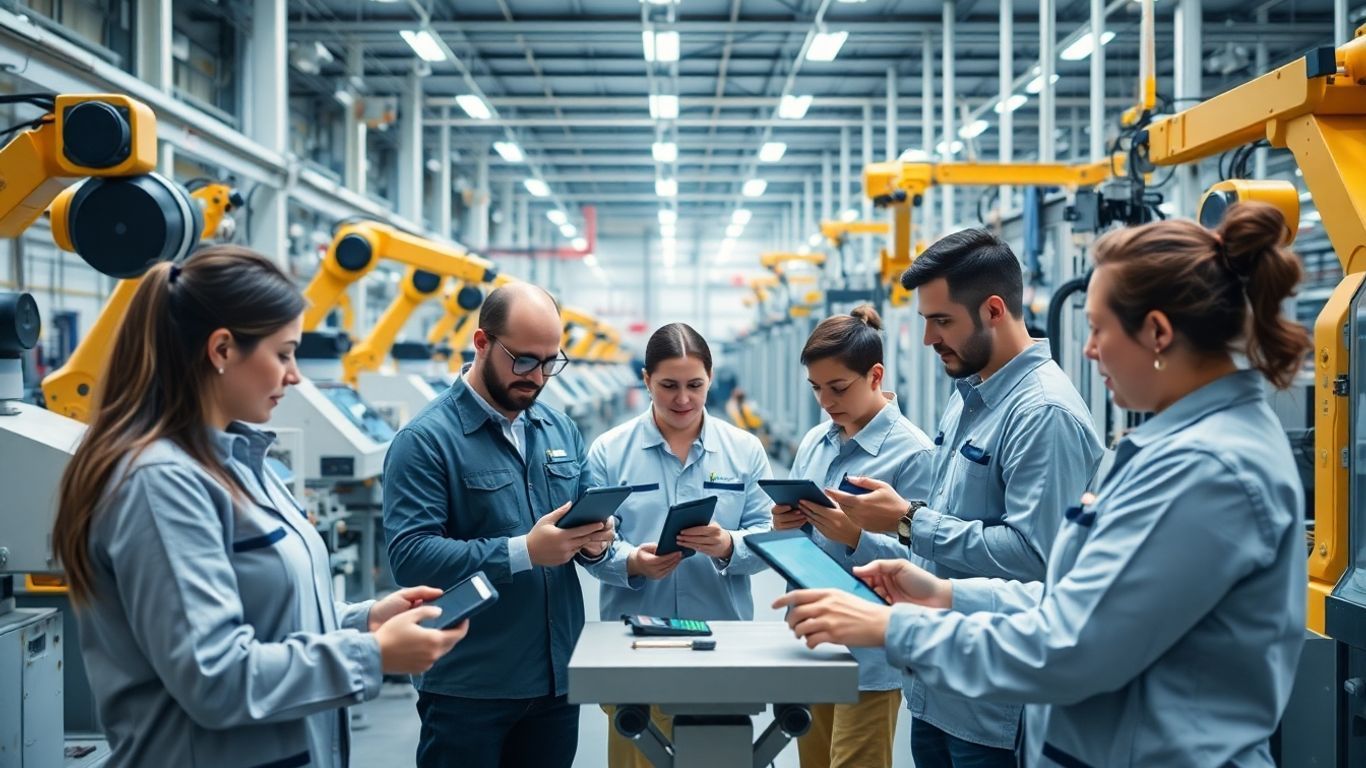
In the dynamic environment of smart factories, connectivity isn't simply about machines exchanging data. It's profoundly about equipping the people on the factory floor with the precise tools and critical information they need to excel at their jobs—together. Ready access to real-time data and robust communication platforms translates directly into fewer operational delays, faster, more confident decisions, and a palpable sense of assurance in day-to-day actions. This particular section will explore how modern connectivity actively supports the workforce and fosters a culture of stronger, more effective collaboration.
Providing Access to Real-Time Information
Gone are the days of laboriously chasing down physical paperwork or patiently waiting for crucial updates. Today, workers can instantly access the information they require, precisely when they need it. Whether it's the live status of a machine, up-to-the-minute production schedules, or vital safety alerts, interconnected systems seamlessly aggregate everything into a single, easily accessible location.
- Dynamic digital dashboards display current production updates with unwavering accuracy.
- Mobile devices deliver swift, targeted notifications concerning any changes or emerging issues.
- Essential training resources and critical safety protocols are always just a tap or click away.
This unprecedented visibility empowers workers to proactively identify and effectively manage problems as they arise, rather than being forced to react retrospectively.
When individuals have consistent, reliable access to accurate, current information, they spend significantly less time fruitlessly searching and dedicate far more time to implementing meaningful improvements.
Centralizing Communication and Training
Communication in traditional factory settings has often been a fragmented affair—prone to misunderstandings, scattered across multiple channels, and often resulting in vital information being overlooked or lost. By migrating everything into a centralized digital hub, plant managers and team leads can effectively disseminate instructions, critical updates, and essential resources to everyone simultaneously.
Embracing centralized collaboration offers a wealth of tangible benefits for the entire workforce:
- Standardized work instructions dramatically reduce confusion and promote consistency.
- Updates and important announcements reach all shifts and teams promptly and uniformly.
- New training modules become instantly accessible to every employee, facilitating continuous learning.
- Valuable feedback from the factory floor can be efficiently collected digitally, enabling rapid analysis and informed decision-making.
Here’s a snapshot illustrating how centralized digital communication definitively outperforms traditional methods:
| Aspect | Traditional (Paper/Oral) | Digital/Centralized |
|---|---|---|
| Message speed | Slow and often delayed | Instant and immediate |
| Accuracy | Prone to human error and misinterpretation | Consistently high and reliable |
| Accessibility | Limited to specific locations or shifts | Wide-reaching (across all shifts and roles) |
| Revision tracking | Difficult and often impractical | Easy, with clear version histories |
Promoting Safety and Compliance Through Connectivity
Smart factory systems are incredibly effective at alerting employees to potential safety risks or critical compliance changes the moment they materialize. This immediate notification capability is absolutely vital for preventing accidents and ensuring continuous adherence to demanding regulatory mandates.
So, what are some of the practical ways connected tools bolster safety and compliance in the workplace?
- Providing real-time alerts the instant a fault or hazardous condition is detected, enabling immediate action.
- Facilitating digital sign-offs and maintaining electronic records for streamlined, auditable compliance trails.
- Generating automated reminders for mandatory certifications or essential renewals, ensuring no deadlines are missed.
All of these interconnected functionalities coalesce to create a significantly safer, more accountable workplace—an environment where individuals are clearly aware of the rules, receive timely reminders of any changes, and can act with decisive speed when something is amiss.
With the power of smart connectivity, workers don’t merely keep pace; they actively stay ahead, collaborating with a level of efficiency and insight that was simply unattainable with fragmented paper trails and isolated legacy systems.
Conclusion
Smart factory connectivity is, without a doubt, fundamentally reshaping the very fabric of how manufacturers operate, and it’s much more than just a passing fad involving fancy gadgets or industry buzzwords. By intelligently linking machines, people, and intricate processes, modern factories gain the remarkable ability to identify problems with greater speed, make more informed and strategic decisions, and maintain exceptionally smooth, continuous operations. While this transformative shift isn't always a walk in the park—challenges like integrating older equipment, the need for new skill sets, and potential supply chain hiccups can indeed make things tricky—the overarching benefits are simply too compelling to overlook. We're talking about substantially less downtime, consistently better product quality, safer working environments, and the crucial agility to react swiftly when circumstances inevitably change. As an increasing number of factories thoughtfully embrace the power of IoT, advanced AI, and robust wireless networks, they are actively constructing a resilient foundation that not only ensures flexibility but also prepares them for whatever future challenges may arise. Ultimately, smart factory connectivity isn’t just a trend; it's rapidly becoming the definitive new normal for manufacturers determined to stay at the forefront of innovation and competitiveness.
Frequently Asked Questions
What is a smart factory?
A smart factory is a contemporary manufacturing facility where machines, the human workforce, and operational processes are all seamlessly interconnected through advanced technologies like the Internet of Things (IoT), artificial intelligence (AI), and cloud computing. This integration allows the factory to gather data in real time, facilitate superior decision-making, and operate with remarkable efficiency.
How does smart factory connectivity improve safety and compliance?
Smart factories leverage sensors and networked devices to continuously monitor both equipment functionality and worker safety. These sophisticated systems can swiftly detect anomalies, such as unsafe operating conditions or impending equipment failures, and promptly alert staff. This proactive approach significantly enhances worker safety and ensures steadfast adherence to crucial regulations and industry standards.
What are the main benefits of using IoT in manufacturing?
The integration of IoT in manufacturing empowers companies to meticulously track their machinery, products, and supplies in real time. This capability means they can identify potential issues early, perform proactive maintenance on machines before costly breakdowns occur, significantly reduce waste, and ultimately produce goods more quickly and to a higher standard of quality.
How do smart factories help reduce downtime and waste?
By establishing deep connectivity between machines and deploying intelligent sensors, factories gain critical foresight, enabling them to anticipate when a component might be nearing failure. They can then strategically schedule necessary repairs before a machine fully ceases operation, which keeps the production line running smoothly and substantially cuts down on both wasted time and materials.
What is the role of advanced wireless networks like 5G in smart factories?
Advanced wireless networks, such as 5G, are instrumental in enabling factories to connect a far greater number of devices and transfer immense volumes of data with unprecedented speed. This high-speed, low-latency connectivity means that machines, sensors, and even personnel can share vital information almost instantaneously, empowering the factory to respond rapidly and effectively to any changes or emerging problems.
How can manufacturers get started with building a smart factory?
To begin the journey of establishing a smart factory, manufacturers should first pinpoint their most pressing operational challenges—perhaps slow production cycles or frequent equipment breakdowns. Subsequently, they can strategically add IoT sensors to critical machinery, interconnect their various systems using cloud technology, and then leverage data analytics to uncover actionable insights for improvement. Progressively, they can continue to integrate new technologies to incrementally enhance their factory's intelligence and capabilities.


