
resources
Unlocking the Future of Property Management with Smart Apartment Data
05 Oct 2025

Smart apartment data is fundamentally transforming how individuals interact with their living spaces and, indeed, how entire apartment buildings are managed. As the adoption of smart devices steadily rises, both property managers and residents are discovering a host of novel benefits. From significantly reducing maintenance costs to cultivating more comfortable and environmentally conscious living environments, these invaluable data insights are increasingly ubiquitous. However, this wealth of new information inevitably brings forth important considerations regarding privacy, security, and, crucially, how to harness this data most effectively. Let's delve into what smart apartment data truly signifies for the trajectory of property management.
Key Takeaways
- Smart apartment data originates from devices such as smart locks, thermostats, and various sensors, providing property managers with a treasure trove of actionable information.
- Leveraging this data can expedite maintenance resolutions, optimize energy consumption, and ultimately enhance residents' overall quality of life.
- Legitimate concerns surrounding privacy and security necessitate robust measures to safeguard resident data and ensure strict adherence to regulatory standards.
- Integrating smart apartment data with other technological platforms—think property management software—streamlines operations and fosters greater efficiency.
- As the deployment of smart devices expands across more apartments, data is poised to play an even more pivotal role in shaping urban living and working environments.
Understanding the Scope of Smart Apartment Data
Smart apartment data is rapidly redefining the way people engage with their homes and how property managers oversee their properties. It’s far more than mere gadget-driven convenience; the influence of smart apartment data extends deep into the operational fabric of buildings. With each new device or interconnected system, additional data streams are introduced, offering all stakeholders richer insights into daily functions and emerging long-term patterns.
Types of Data Generated by Smart Devices
Modern apartments, often equipped with a growing array of smart devices, continuously collect all sorts of information. Here’s a brief overview of the common data types you might encounter:
- Usage Patterns: This includes insights into when and how frequently residents utilize shared amenities like fitness centers or communal lounges.
- Energy Consumption: Smart thermostats and advanced lighting systems meticulously track power usage—and precisely when it occurs.
- Access Logs: Smart locks record who enters and exits the premises, often noting the exact time and method of entry.
- Maintenance Data: Integrated sensors are adept at identifying potential issues early on, such as subtle water leaks or inefficiencies within HVAC systems.
- Security Events: Cameras and alarm systems are configured to flag any unusual or unauthorized activity within the property.
Such comprehensive data truly paints a detailed picture of a property's dynamic on any given day.
Key Sources Within the Smart Apartment Ecosystem
A diverse range of devices and systems contributes to the continuous flow of data within a smart apartment ecosystem. Some of the most significant sources include:
- Smart locks, video doorbells, and advanced intercom systems
- Environmental sensors, which monitor conditions like temperature, humidity, and detect leaks
- Integrated cameras and comprehensive security systems
- Resident-facing applications, used for everything from amenity bookings to direct communication
- Sophisticated property management software suites
- "Smart" appliances that can report their own status or service needs, like refrigerators or washing machines
This table offers a clear snapshot of where much of this valuable data originates:
| Device/System | Common Data Points |
|---|---|
| Smart Thermostats | Temperatures, usage times, manual adjustments |
| Smart Locks | Entry times, authenticated user IDs |
| Leak Sensors | Alerts, precise detection timestamps |
| Cameras | Recorded events, motion-triggered alerts |
| Resident Apps | Maintenance requests, valuable feedback |
How Smart Apartment Data Is Collected and Stored
While collecting all this data might seem straightforward, it actually relies on a sophisticated blend of wireless technologies and secure networks to ensure a steady, reliable flow. Here’s the fundamental process:
- Devices capture data in real time—sometimes every second, other times at predefined intervals.
- This data is then streamed to a central platform, frequently cloud-based, allowing managers and residents to access information from virtually anywhere.
- Robust encryption and stringent access controls are put in place to keep personal details rigorously protected.
- Crucially, only authorized individuals—such as specific property managers or the residents themselves—can view certain information.
The entire system functions most effectively when data moves swiftly and securely, empowering everyone involved—from residents to building owners—to make smarter choices simply by observing what’s unfolding daily.
These sophisticated data collection systems are engineered to flag issues, like potential leaks or power spikes, instantly; however, historical data is also meticulously stored. This comprehensive approach helps in identifying long-term patterns, anticipating future requirements, and ultimately guiding decisions that save valuable time, money, and unnecessary hassle.
Enhancing Property Management Through Data-Driven Insights
The ascendancy of smart apartment data is undeniably transforming the landscape of daily property management. Analyzing live data empowers property managers to identify potential issues well before they escalate into costly problems, enabling swift, well-informed decisions and, in turn, cultivating a superior experience for both residents and owners. Indeed, smart home integrations and data-driven insights are instrumental in helping landlords optimize portfolio performance, significantly reduce operational costs, and maintain a competitive edge in a constantly evolving market (data-driven insights). Let's explore some of the principal ways this data is making a tangible difference.
Optimizing Maintenance and Operational Efficiency
With smart sensors and interconnected devices meticulously tracking everything from HVAC systems to subtle water leaks, maintenance teams are no longer simply reacting to resident complaints. Instead, they can proactively schedule work based on genuine needs, thereby drastically reducing emergency repairs and making costs far more predictable. The tangible result? Increased uptime, diminished waste, and a property that operates precisely as it should.
Key impacts here include:
- Receiving advance notice of potential equipment failures, thanks to continuous performance tracking.
- Scheduling preventive maintenance only when genuinely necessary, not on a rigid calendar.
- Achieving quicker response times to any detected issues, big or small.
| Smart Data Practice | Operational Benefit |
|---|---|
| Leak detection sensors | Fewer costly water damage incidents |
| HVAC usage monitoring | Substantially lowered energy bills |
| Predictive maintenance logs | A noticeable reduction in unplanned outages |
Using real-time data to catch potential problems before they balloon means fewer disruptions for residents and, crucially, fewer dollars spent fixing preventable issues—a win-win, wouldn't you say?
Improving Resident Satisfaction and Experience
It's worth noting that smart apartment data isn't exclusively beneficial for those managing the building. When residents, for example, can effortlessly adjust their thermostat or receive package delivery notifications directly on their smartphones, it undeniably simplifies daily life. Beyond that, the aggregated data also reveals which amenities are most frequently utilized, enabling management to refine or promote what truly matters to its community.
Here are just a few ways smart data significantly contributes to resident happiness:
- Instant, transparent updates on the progress of maintenance requests.
- Automated, seamless access to smart entry systems or convenient common space reservations.
- Direct feedback collection facilitated through intuitive resident portals.
Ultimately, smart features also play a vital role in reducing repair wait times and enhancing communication—factors that both go a long way toward fostering resident loyalty and retention.
Data-Backed Decision Making for Property Managers
No one wants to operate on guesswork when it comes to property success. With smart apartment data at their fingertips, managers gain precise knowledge of utility consumption patterns, identify units that might be vacant for too long, and understand which upgrades are most likely to shorten future vacancies. Information gleaned from real-time dashboards eliminates much of the uncertainty from budgeting and long-term strategic planning.
Property managers typically leverage this information in three key ways:
- Accurately measuring the ROI for smart device upgrades and property renovations.
- Strategically adjusting marketing efforts based on discernible tour and move-in trends.
- Comparing utility consumption patterns across the portfolio to pinpoint areas for significant savings.
It’s all about basing decisions on what's actually happening on the ground—rather than relying solely on broad averages or gut feelings—to truly guide successful property management strategies.
Data, in essence, helps demystify what residents genuinely want, what buildings truly need, and where precious time or money might be inadvertently wasted. Pairing this insight with the right technology truly ensures that property management remains ahead of the curve.
Harnessing Smart Apartment Data for Sustainability
Sustainability is far more than a mere buzzword; it's rapidly evolving into a practical imperative for modern apartment living. Smart apartment data now stands as one of the most dependable tools for minimizing waste and operating buildings with a reduced ecological footprint. Let's explore how data demonstrably improves efficiency and actively promotes greener lifestyles.
Lowering Energy Consumption Through Data Analytics
When smart devices diligently collect room-by-room or unit-specific usage data, it provides both property managers and residents with invaluable insights into where and when energy might be needlessly expended. These precise insights can be quickly translated into tangible savings. For instance:
- Smart thermostats automatically adjust settings when apartments are unoccupied.
- Intelligent lighting systems switch off in communal areas and vacant rooms without intervention.
- HVAC systems in common areas can be precisely timed for peak and off-peak periods, optimizing efficiency.
This highly targeted approach invariably leads to significant reductions in monthly energy bills. Furthermore, it represents a considerable boon for the environment. Below is an illustrative sample of how energy metrics from smart apartments might appear over a typical month:
| Data Type | Baseline Usage | Post-Optimization |
|---|---|---|
| Electricity (kWh) | 1200 | 950 |
| Gas (therms) | 65 | 52 |
| Cost ($) | 175 | 138 |
It's truly remarkable how even seemingly minor adjustments, driven by intelligent, data-powered systems, can aggregate into substantial annual savings for an entire building.
Utilizing Water and Environmental Sensors
Detecting water leaks and identifying waste can be incredibly challenging without the aid of advanced technology. Smart water sensors, however, are capable of immediately pinpointing problems that the traditional "eyes-and-ears" method would likely miss. Within individual apartments, these ingenious systems:
- Issue timely alerts about leaks, potential frozen pipes, or unusual usage patterns, ensuring issues are resolved much faster.
- Track water consumption over time, making it glaringly obvious where to address inefficiencies and waste.
- Generate monthly reports for residents, empowering them to notice and proactively address higher-than-normal consumption.
Additionally, with sophisticated environmental sensors in place, it becomes possible to continuously monitor air quality, humidity levels, and CO2 concentrations, allowing buildings to activate ventilation systems only precisely when necessary.
Promoting Eco-Friendly Resident Behaviors
It's a well-established fact that people tend to respond positively when provided with accurate information at the right moment. Smart apartment systems are uniquely positioned to encourage greener choices:
- Personalized dashboards can visually present residents with their energy, water, or waste production metrics, often in comparison to building averages.
- Thoughtful push notifications can serve as gentle reminders to recycle or encourage the utilization of off-peak electricity.
- Recycling and compost bins can be integrated with tracking systems, allowing residents to witness the positive outcomes of their conscientious efforts.
These consistent reminders and subtle nudges can genuinely foster a stronger sense of shared environmental responsibility within the building's community.
Most people inherently wish to reduce their utility bills and lessen their environmental impact—smart apartment data simply makes it vastly more accessible for them to translate that desire into action.
Addressing Privacy and Security Challenges in Smart Apartments
As more apartment buildings embrace smart devices, concerns regarding privacy and security inevitably grow in parallel with the perceived convenience. While smart apartment data undoubtedly enhances operations and simplifies daily life, it also means a greater volume of personal details circulating within cloud-based systems. Here, we'll take a close look at the most pressing challenges and explore practical, effective solutions.
Ensuring Resident Data Privacy
Residents rightly expect their homes to be secure in every sense—and that absolutely extends to their data. Many understandably worry about what information is being gathered, who has access to it, and precisely how it's being utilized. Building and maintaining trust requires:
- Clearly explaining exactly what data is collected from various smart devices (such as locks, thermostats, and sensors).
- Being fully transparent about data storage locations and delineating specific access privileges.
- Offering residents genuine choices or controls over what personal information is shared.
- Carefully selecting reliable technology partners with demonstrable, robust privacy credentials.
Clear, ongoing communication with residents about privacy policies is now more crucial than ever. When people understand the fundamental practices, don't they naturally feel more confident and at ease in their daily routines?
Implementing Robust Cybersecurity Measures
The accessibility offered by cloud-based smart data, while convenient, also introduces inherent risks. Unfortunately, hackers and data breaches remain a very real possibility. Apartment managers can significantly mitigate these risks and safeguard residents by actively employing:
- Strong, multi-layered encryption for data, both when it's at rest and in transit.
- Regularly updated firmware and software to promptly patch any identified vulnerabilities.
- Mandatory multi-factor authentication for all staff and management applications.
- Strictly limited data access—granting permissions only when absolutely necessary for a task.
- Consistent security audits and simulation drills to uncover any potential weak spots before they become problems.
For instance, as highlighted by insights from Snappt, smart apartments heavily rely on robust encryption protocols and comprehensive safeguards to protect device data and the entire building's network. Indeed, proactive prevention is always a far better strategy than dealing with the aftermath of an incident.
Navigating Regulations and Compliance Standards
New privacy laws are continually emerging at various governmental levels—city, state, and national—each bringing its own unique set of requirements. Staying meticulously abreast of these rules is paramount. Noncompliance can result in substantial fines or costly lawsuits—certainly more than just a minor inconvenience for businesses.
Managers typically take several key steps, including:
- Vigilantly monitoring changes in privacy regulations and proactively updating policies as needed.
- Collaborating closely with legal advisors who possess expertise in both technology law and real estate.
- Providing consistent ethics and compliance training for all staff members who handle sensitive data.
| Area of Regulation | Typical Requirement |
|---|---|
| Data Retention | Strictly limit how long data is stored |
| Consent Collection | Obtain clear, explicit resident permission |
| Access Logging | Meticulously track who accesses what and when |
| Disclosure of Data Breaches | Promptly inform affected residents |
While privacy and security challenges are unlikely to disappear, implementing sound policies and leveraging advanced technology can make a profound difference. When residents are confident that their personal information is respected and diligently protected, they are far more inclined to embrace the many advantages of smart living.
Integrating Smart Apartment Data with Modern Technology Platforms
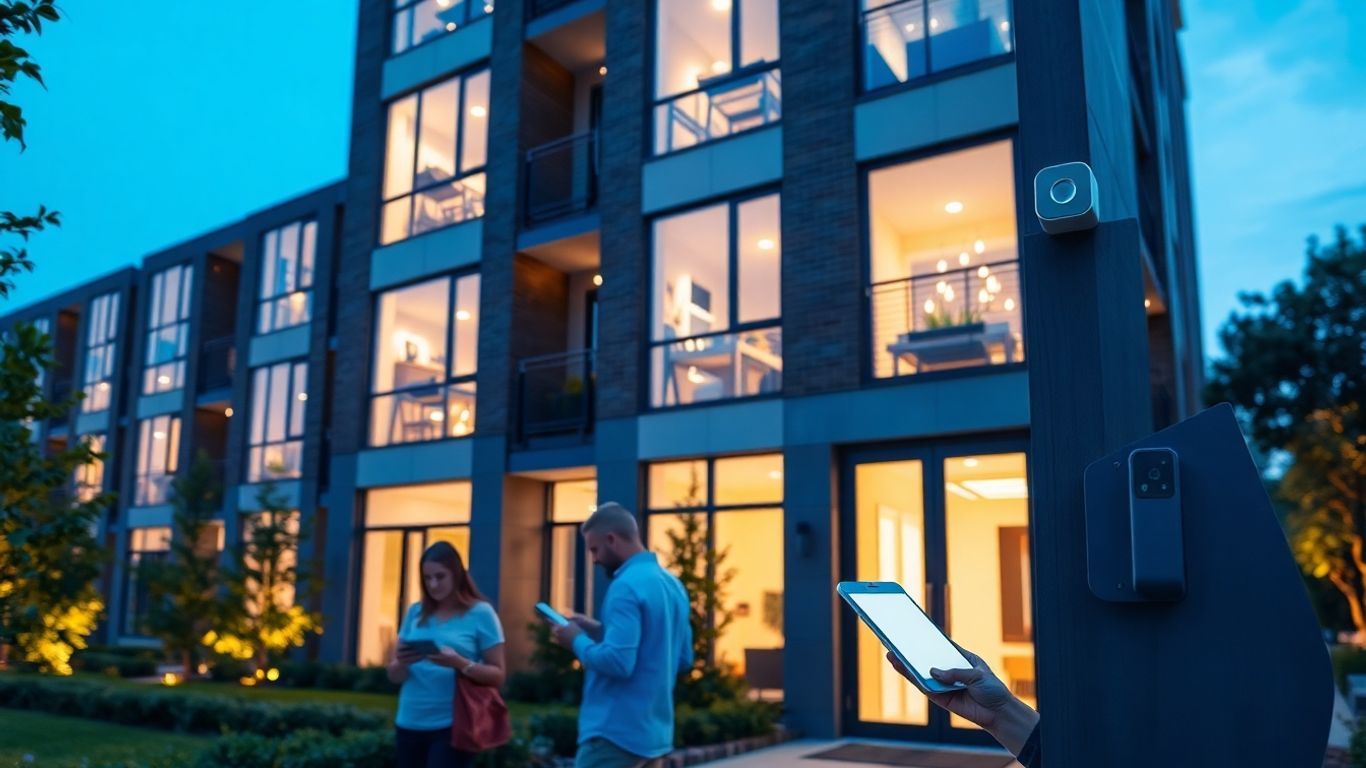
Smart apartment data holds immense promise, but here’s the catch: unless all those disparate smart devices and systems can effectively "communicate" with one another, property management quickly descends into a convoluted jumble of disconnected information. Achieving seamless cooperation between different devices and platforms isn’t an automatic process—it demands thoughtful planning, the right software solutions, and, at times, a willingness to upgrade or adapt older systems.
Seamless Connection with Property Management Software
For the majority of property managers, the initial—and arguably most crucial—step in making sense of smart apartment data involves integrating it with their core property management software. This critical connection enables managers to view a comprehensive overview in a single location, encompassing everything from open work orders to granular energy usage statistics. Consolidating security systems, energy controls, and resident-facing applications not only saves invaluable time but also significantly reduces the potential for costly errors.
- Automated syncing of resident information and access credentials for streamlined operations.
- Maintenance notifications intelligently triggered by alerts from smart sensors.
- Centralized dashboards that provide a holistic view of all device alerts and crucial analytics.
Integrating smart devices with building management software transcends mere convenience. It ensures that vital information is readily available precisely when it’s needed, empowering teams to make faster, more informed decisions—which, frankly, is a game-changer.
Real-Time IoT Integration and Automation
The power of real-time data for enhancing efficiency simply cannot be overstated. Instantaneous updates from smart sensors—like the detection of a leak under a sink or a sudden drop in building temperature—are instrumental in catching problems before they can escalate. Connecting these dynamic data streams to automation tools can also lead to significant cost and hassle savings, allowing devices to intelligently adjust lighting and HVAC based on actual room occupancy, or dispatch immediate alerts to the appropriate staff the moment something requires attention.
Here’s a concise illustration of what real-time IoT integration can look like in practical application:
| Smart Device | Data Collected | Automation Trigger |
|---|---|---|
| Thermostat | Temperature, occupancy status | HVAC system adjusts cooling/heating levels |
| Leak Sensor | Detection of water | Automatic creation of a maintenance alert |
| Smart Lock | Door access events (e.g., entry/exit) | Real-time update to the security log |
Overcoming System Integration Barriers
Older buildings and pre-existing technological infrastructures can indeed present substantial hurdles. Many legacy systems often employ proprietary protocols, meaning not everything is inherently designed to work together from the outset. Making genuine sense of it all necessitates:
- Carefully planning precisely how each new device should connect and interact across various existing systems.
- Prioritizing platforms that actively support open standards, fostering greater compatibility.
- Regularly updating all software to ensure continued compatibility and optimal performance.
While integration can indeed be a challenging endeavor, particularly in properties with older infrastructure, the long-term benefits in operational efficiency and elevated resident satisfaction unquestionably make the upfront effort worthwhile. Getting the integration strategy right is key to preventing fragmented data silos and, instead, providing a truly comprehensive picture of building health and resident needs.
The bedrock of truly smart property management is robust integration—without it, even the most cutting-edge technology simply can't deliver its full, promised value.
Empowering Residents and Building Community Through Data
Data derived from smart apartments isn't solely beneficial for property managers; far from it. It fundamentally transforms how residents engage with their individual living spaces and, indeed, how they connect with one another. Providing access to both personal and communal data lays a solid foundation for transparency, collaborative decision-making, and ultimately, a more cohesive community bond.
Providing Residents with Personal Usage Insights
When residents are empowered to view real-time or historical data pertaining to their own utility consumption, it can remarkably influence daily habits. Here’s how this newfound transparency proves genuinely helpful:
- They can diligently track their daily or monthly energy and water usage.
- Residents gain insights into trends, such as identifying when usage spikes during summer months or even on weekends.
- They can establish personal conservation goals or benchmark their consumption against the building's average.
| Insight Type | Benefit |
|---|---|
| Energy usage | Helps identify costly habits, actively cut bills |
| Water consumption | Enables sooner leak detection, promotes water saving |
| Smart device data | Allows checking if doors are locked, lights are off for peace of mind |
Isn't it true that more control often translates into smarter, simpler decisions—and considerably less frustration when those monthly bills arrive?
Facilitating Community Feedback and Civic Participation
Providing residents with a voice extends well beyond the scope of annual surveys. Smart apartment systems establish a direct, convenient channel for input on potential improvements and community priorities, all accessible right from a smartphone or tablet. Examples include:
- Instant polls designed for amenity upgrades or proposed rule changes.
- Digital bulletin boards for maintenance feedback or innovative event suggestions.
- Community forums fostering discussion on local issues or new, collaborative ideas.
At a broader city level, anonymized data aggregated from apartments can inform and help update public resources. For instance, collective usage trends can guide crucial decisions on utility infrastructure and urban planning initiatives, especially within smart buildings that seamlessly blend technological advancement with a strong community focus, as brilliantly articulated in discussions on connected communities.
Enhancing Transparency and Trust in Property Management
Trust naturally flourishes when residents possess a clear understanding of how their information is being utilized. Through transparent reporting and open communication channels, property management teams can visibly demonstrate that they actively respond to feedback and readily share ongoing initiatives:
- Interactive dashboards for tracking maintenance request progress.
- Regular, proactive updates on building-wide projects and improvements.
- Open Q&A sessions with management concerning data-driven changes and policies.
Ultimately, sound data practices underpin honest, two-way communication, which in turn helps everyone cultivate a deeper sense of ownership in their home and the broader community they inhabit.
The Evolving Future of Smart Apartment Data in Urban Living

Smart apartment data is undeniably at the forefront of shaping the trajectory of urban living. We’re witnessing an accelerating integration between what transpires within our individual apartments and the broader dynamics of neighborhoods and entire metropolitan areas. Daily life—from our energy consumption habits to the management of buildings and the way residents communicate with property managers—is increasingly influenced as technology matures and evolves. Let's pinpoint some clear indicators of where things are undeniably headed next.
Emerging Trends and Innovative Use Cases
New and compelling ideas continue to surface, driven by the capabilities of smart apartment data. Some of these applications are already actively in play, while others are just beginning to gain significant traction.
- Artificial intelligence (AI) is making notable inroads into maintenance planning. Systems can now proactively alert managers about potential equipment issues well before any actual failure occurs.
- Sophisticated sensors are gathering comprehensive environmental information, meticulously tracking factors like air quality or ambient noise levels to facilitate healthier living environments.
- Crucially, this data is increasingly feeding into city-wide dashboards, allowing officials to rapidly identify patterns—for instance, which areas exhibit the highest water or energy consumption—and respond with greater agility.
What's truly revolutionary is the burgeoning degree to which individual apartments are beginning to "converse" with larger city systems, extending far beyond interactions solely with their occupants.
Personalization and AI-Driven Resident Services
If you've ever found yourself wishing your home could somehow anticipate your needs, you're certainly not alone. This very concept is beginning to materialize, largely thanks to the synergistic power of smart apartment data and advanced AI.
Here are some key aspects that personalized AI services are progressively unlocking:
- Tailored comfort—smart thermostats are learning individual preferences, intelligently tweaking settings specifically for you.
- Intuitive appliance reminders—systems can send a timely ping if, say, you've inadvertently left an oven on, or even suggest optimal times to run your dishwasher for reduced energy costs.
- Customized maintenance notifications—your apartment might proactively inform you about a slow-draining sink before you’ve even had a chance to notice it yourself.
The table below illustrates how various AI-driven features are poised to impact day-to-day living:
| Feature | Impact |
|---|---|
| Predictive Maintenance | Fewer unexpected repairs, greater peace of mind |
| Personalized Energy Optimization | Lower utility bills, enhanced comfort levels |
| Security Automation | Instant alerts, a heightened sense of safety and control |
Over time, these meticulously tailored services are transforming apartments into truly responsive living spaces that more naturally adapt to your unique lifestyle and preferences—thereby elevating both comfort and personal control significantly.
Smart Apartment Data’s Role in Shaping Smarter Cities
The future narrative of apartment data isn't confined to individual buildings; rather, it’s intrinsically linked to its integration within the expansive network of urban technological systems. Here's a glimpse into how this crucial dynamic is set to unfold:
- Aggregated energy data from numerous apartments can empower cities to intelligently adjust their power grids during periods of peak demand.
- Insights into occupancy trends can directly inform how public transit schedules are optimized, ensuring buses and trains operate precisely where and when they're most needed.
- Comprehensive waste and water tracking across multiple buildings promises to make city services more efficient and environmentally conscious.
Key mechanisms enabling this transformation include:
- Real-time data sharing capabilities with urban planners.
- Data-guided upgrades to vital infrastructure, including roads, utilities, and emergency response systems.
- Neighborhood-wide alerts for critical events such as power outages or severe weather conditions.
In essence, the future promises a more interconnected and responsive urban environment—benefits that extend to everyone, not merely building owners.
Worlds that were once largely distinct—your apartment, your street, your city—are increasingly converging, thanks to these cutting-edge technologies. While it's still relatively early days, smart apartment data is unequivocally setting the standard for the next generation of urban living experiences.
Conclusion
So, where does all this exciting innovation truly lead us? Smart apartment data is fundamentally reshaping the experience of apartment living for property managers, owners, and residents alike. It's truly more than just about sophisticated gadgets or the latest tech; it's about optimizing functionality and enhancing convenience for everyone involved. Property managers gain unparalleled access to information, enabling them to run buildings with greater efficiency, while residents enjoy enhanced control and comfort. Moreover, cities themselves can leverage this data for more intelligent urban planning. Of course, there are still some challenges to navigate—ensuring seamless connectivity between diverse systems and rigorously safeguarding data, for instance. Yet, as the adoption of these systems expands and the underlying technology continues its rapid advancement, it's abundantly clear that smart apartment data is here to stay. If you're involved in property management or simply curious about the future direction of apartment living, now is indeed an opportune moment to pay close attention. The future appears significantly more connected—and perhaps, a touch more effortless, too.
Frequently Asked Questions
What exactly is smart apartment data?
Smart apartment data refers to the information gathered from various smart devices and integrated systems within apartment buildings. This can include data from smart locks, intelligent thermostats, security cameras, and even water leak sensors. This wealth of information assists property managers and residents in making more informed decisions concerning safety, energy usage, and their overall living experience.
How does smart apartment data simplify property management tasks?
Smart apartment data empowers property managers to proactively identify potential issues, such as unnoticed leaks or malfunctioning equipment, allowing for much faster resolution. It also helps them meticulously track energy consumption, bolster building security, and gain a clearer understanding of resident needs and preferences.
Is my personal information genuinely secure with smart apartment technology?
The vast majority of smart apartment systems are conscientiously designed with resident data privacy and security as a core principle. Property managers typically implement robust passwords, strong encryption, and adhere to strict protocols to protect your information. Nonetheless, it’s always wise and important to inquire about how your data is specifically handled and stored.
In what ways can smart apartment data contribute to energy savings?
Smart apartment data provides precise insights into when and where energy is being consumed most. Property managers can leverage this information to intelligently adjust heating, cooling, and lighting systems, which directly leads to significant energy savings and reduced operational costs. Residents, too, can monitor their own usage patterns and make conscious changes to conserve even more.
Are smart apartment systems compatible with existing property management software?
Absolutely. Many advanced smart apartment systems are designed to seamlessly integrate with broader property management software platforms. This integration creates a centralized hub, making it considerably easier to manage maintenance requests, track rent payments, and facilitate communication with residents—all from a single, cohesive interface.
What are some of the primary challenges associated with utilizing smart apartment data?
Key challenges often include maintaining resident data privacy, ensuring interoperability between devices from different manufacturers, and staying compliant with evolving data usage regulations. Property managers also need to ensure that the collected data is consistently accurate, relevant, and genuinely actionable.


